AI Plan for Support Leaders: 24/7 Customer Support with Governance
AI Plan for Support Leaders: 24/7 Customer Support with Governance
Insights
14 min

24/7 customer support means customers can reach your company any time, and the most practical way to deliver it is a layered model: AI triage for routine requests plus human escalation, adding follow-the-sun human teams only where volume justifies them. Skip the all-night call center until the math demands it. Start with a pilot, measure how often the AI resolves issues on its own, and expand from there.
TL;DR:
Implement AI triage first to handle high-volume routine requests, then expand to follow-the-sun support as regional volumes justify staffing costs.
Ensure your support system includes omnichannel routing, a knowledge base, and escalation rules to prevent context loss and maintain compliance.
Track key metrics like response times, first-contact resolution, and re-contact rates to prove continuous support effectiveness and customer satisfaction.
Avoid overinvesting in pure night shifts; wait for data confirming overnight demand before staffing around the clock.
Use no-code platforms like Droxy to deploy layered customer support efficiently and customize escalation paths without lengthy development cycles.
DroxyMake Support Available Around The ClockDeploy customized AI agents across your customer channels to answer inquiries instantly and help reduce wait times.Explore Droxy
Table of Contents
What Does 24/7 Customer Support Actually Mean?
What Are the Real Benefits of Always-Available Help?
Which 24/7 Support Model Fits Your Business?
What Technology Do You Need for Reliable Coverage?
How Do You Roll Out 24/7 Support Without Overbuilding?
What KPIs Actually Prove Your Support Is Working?
What Can Go Wrong, and How Do You Prevent It?
How Does a No-Code Platform Like Droxy Support This Model?
A Practitioner’s Take on Where Teams Overinvest
Ready to Build Your Layered Support Model?
Sources
What Does 24/7 Customer Support Actually Mean?
True round-the-clock support isn’t one employee with a laptop checking messages at 2 a.m. It means a defined system, spanning chat, email, phone, and social channels, that responds to every inquiry regardless of time zone, weekend, or holiday, with a documented path from first contact to resolution.
A lot of businesses believe they already offer 24/7 support because someone is “usually reachable.” That’s not continuous coverage. It’s improvisation, and it breaks the first time your one after-hours contact takes a vacation. Real coverage requires structured routing, a knowledge base the system can draw from, and clear rules for when a question gets escalated to a person.
Not every business needs full-time coverage on day one. A regional home services company might only need extended hours. A global ecommerce brand selling into different time zones usually needs it fast, because every unanswered message overnight is a missed sale or a frustrated customer by morning.
What Are the Real Benefits of Always-Available Help?
Wait time is the single weakest point in most customer service experiences, according to Qualtrics XM Institute’s global consumer research, and faster resolution directly increases customer loyalty and repeat purchase behavior. Close that gap and you change how customers feel about your brand before they even finish typing their question.
The benefits compound from there:
Higher conversion: customers who get a fast answer at 11 p.m. don’t abandon their cart and shop a competitor instead.
Lower churn: issues resolved on first contact build trust that carries into the next purchase.
Better reputation: public reviews and social mentions skew positive when response times shrink.
Improved staff experience: a follow-the-sun model, where different regional teams hand off shifts during daylight hours, avoids the burnout and turnover that plague single-location night shifts.
Pro Tip: Track how many customers who message after hours convert within 24 hours of getting a response. That single number often justifies the entire investment in continuous coverage.
Which 24/7 Support Model Fits Your Business?
Four models dominate the market, and each carries different cost, quality, and staffing trade-offs.
The AI-first layered model puts an AI agent in front of every inquiry, resolving routine questions instantly and escalating anything complex to a human during business hours. It’s the most cost-effective starting point for low-to-medium volume businesses, and it’s increasingly capable: Gartner projects that agentic AI will autonomously resolve a large share of common service issues within the next few years.
Follow-the-sun staffs human teams roughly eight hours apart around the globe, so someone is always working daytime hours somewhere. PITON-Global’s research shows this model beats single-location night shifts on both quality and retention, but it only pays off once regional volume justifies the overhead of local management.
Night-shift staffing, the traditional fallback, tends to produce higher error rates and turnover. Fatigue and isolation take a toll that shows up in your quality scores within months.
Hybrid approaches blend AI triage with follow-the-sun coverage in high-volume regions and human night shifts only where truly necessary.
Start AI-first if you’re under low message volume.
Move toward follow-the-sun once a region hits a volume break-even point that justifies dedicated local staff.
Avoid pure night shifts unless volume is too low to justify a second region but too unpredictable for AI alone.
What Technology Do You Need for Reliable Coverage?
Continuous support only works when the underlying systems hold up under pressure. Four components matter most.
Omnichannel routing with context persistence ensures a customer who starts on WhatsApp and follows up by phone doesn’t have to repeat themselves. Losing context between channels is one of the fastest ways to erode trust built by a fast first response.
A grounded knowledge base, often using retrieval-augmented generation (RAG), keeps AI answers tied to your actual policies and product data instead of generic guesses. This is how you avoid what researchers call “plausible error,” fluent-sounding answers that are simply wrong, a risk documented in service-design research on AI-enabled systems.
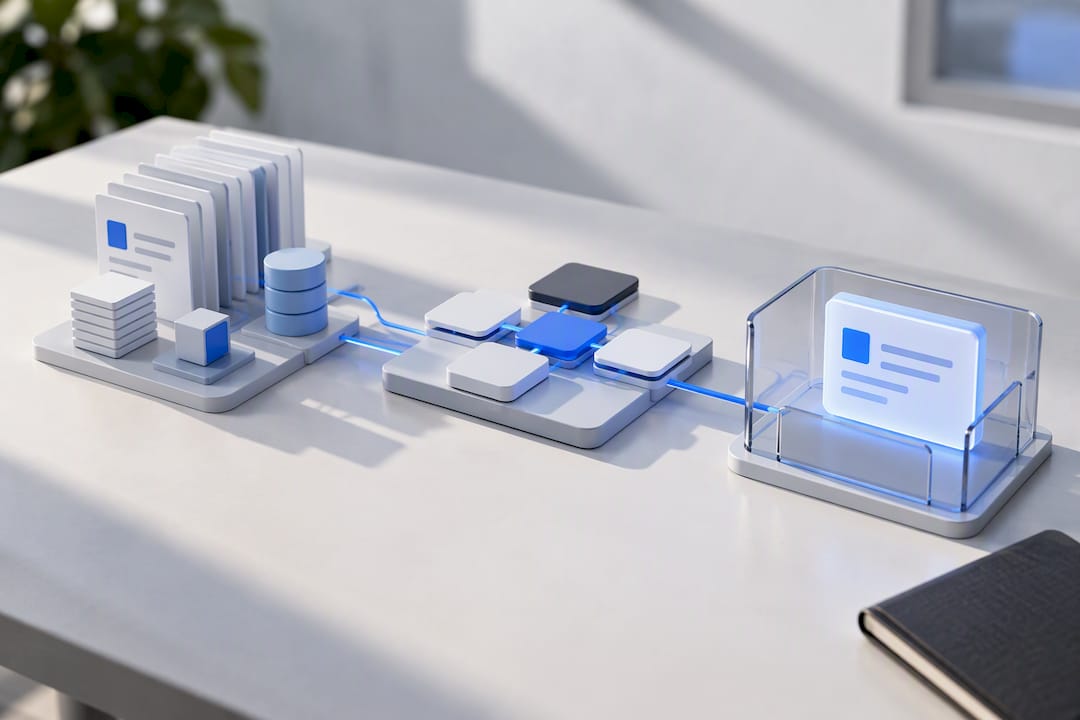
Orchestration and escalation rules define exactly when a conversation moves from AI to human, and structured orchestration frameworks have been shown to meaningfully improve policy adherence for AI agents handling support conversations.
Human-in-the-loop QA closes the loop:
Sample conversations regularly for accuracy and tone.
Score AI responses against your actual policy documents.
Route edge cases to a human reviewer before they become a pattern.
How Do You Roll Out 24/7 Support Without Overbuilding?
A phased rollout keeps costs predictable and lets you prove value before expanding.
Pilot AI triage first. Deploy an AI agent to handle your highest-volume Tier 0 and Tier 1 requests, order status, password resets, FAQs, and measure self-service rate (SSR) alongside transactional NPS (tNPS) from day one.
Build escalation and human handoff. Define the rules that push a conversation to a person, and make sure the human receives full context instead of starting from scratch.
Add follow-the-sun only where volume justifies it. Once a region’s ticket volume clears the break-even point for staffing overhead, expand human coverage there rather than everywhere at once.
Codify runbooks and handoff rituals. A common practice: the outgoing team clears its queue to a defined SLA threshold, and the incoming team runs a short synchronous review of any overnight priority incidents before taking over.
Check legal and regulatory requirements for your regions, particularly around data handling and AI disclosure, before scaling further.
Train staff on escalated cases specifically, not general customer service, since the conversations they receive are the ones AI couldn’t resolve.
Pro Tip: *Resist hiring for a night shift until your after-hours volume data justifies it.
What KPIs Actually Prove Your Support Is Working?
Five metrics matter more than the rest: time to first response, self-service rate (SSR), first-contact resolution (FCR), transactional NPS (tNPS), and re-contact rate.
Watch the tension between SSR and tNPS closely. Research on large-scale support AI deployments found that routing a frustrated customer to a human quickly often raises tNPS even when it lowers your automation rate. Chasing a high SSR number at the expense of customer sentiment is a losing trade.
Build your dashboard around these signals:
Time to first response, tracked separately for AI and human-handled conversations.
FCR, since Qualtrics data confirms it’s one of the strongest predictors of customer loyalty.
Re-contact rate, which flags cases the AI marked resolved but weren’t.
SLA adherence alerts, triggered whenever response times drift past your target window.
What Can Go Wrong, and How Do You Prevent It?
Governance gaps are the most common failure point. Research on agentic AI deployment identifies governance as the primary barrier to scaling AI support safely, recommending boundary monitoring aligned with regional rules like GDPR.
The practical risks and fixes:
Plausible error (confident, wrong answers): mitigate with grounded knowledge sources, confidence thresholds that trigger human review, and periodic LLM-as-a-judge audits scoring conversations for accuracy.
Dropped handoffs: fix with shared CRM access and a mandatory context summary passed to every human agent.
Regulatory exposure: map every AI-handled workflow against your regional data and disclosure requirements before launch, not after.
Premature night-shift hiring: wait for volume data before staffing a location around the clock. Early hires often sit idle or burn out fast when overnight demand doesn’t match projections.
How Does a No-Code Platform Like Droxy Support This Model?
Droxy deploys AI agents across website chat, phone, WhatsApp, Instagram, Facebook, and Shopify from a single no-code platform, matching the layered approach this article recommends: AI handles routine volume, humans step in when it matters. Deep customization keeps responses aligned with your brand voice, while built-in analytics show exactly where automation is working and where it isn’t.
Businesses using Droxy report improved engagement, reduced wait times, and higher lead conversion, with more than 60,000 users currently running their customer interactions through the platform. Human hand-off and knowledge-base integration are built in, so the escalation path described earlier in this article isn’t a custom project. It’s a configuration.
A Practitioner’s Take on Where Teams Overinvest
Most businesses overbuild the wrong layer first. The sequencing matters more than the tooling.
Three moves worth making this quarter: pilot AI triage on your highest-volume request type, write down your escalation runbook even if it’s rough, and set a tNPS target before you optimize for automation rate. Get the order right and the rest follows.
— Elena
Ready to Build Your Layered Support Model?
Droxy gives you a working AI-first triage layer without hiring a development team or waiting months for integration. You get website, phone, WhatsApp, Instagram, and Facebook agents running from one dashboard, each trained on your own knowledge base and configured to hand off to a human exactly when your escalation rules say to.
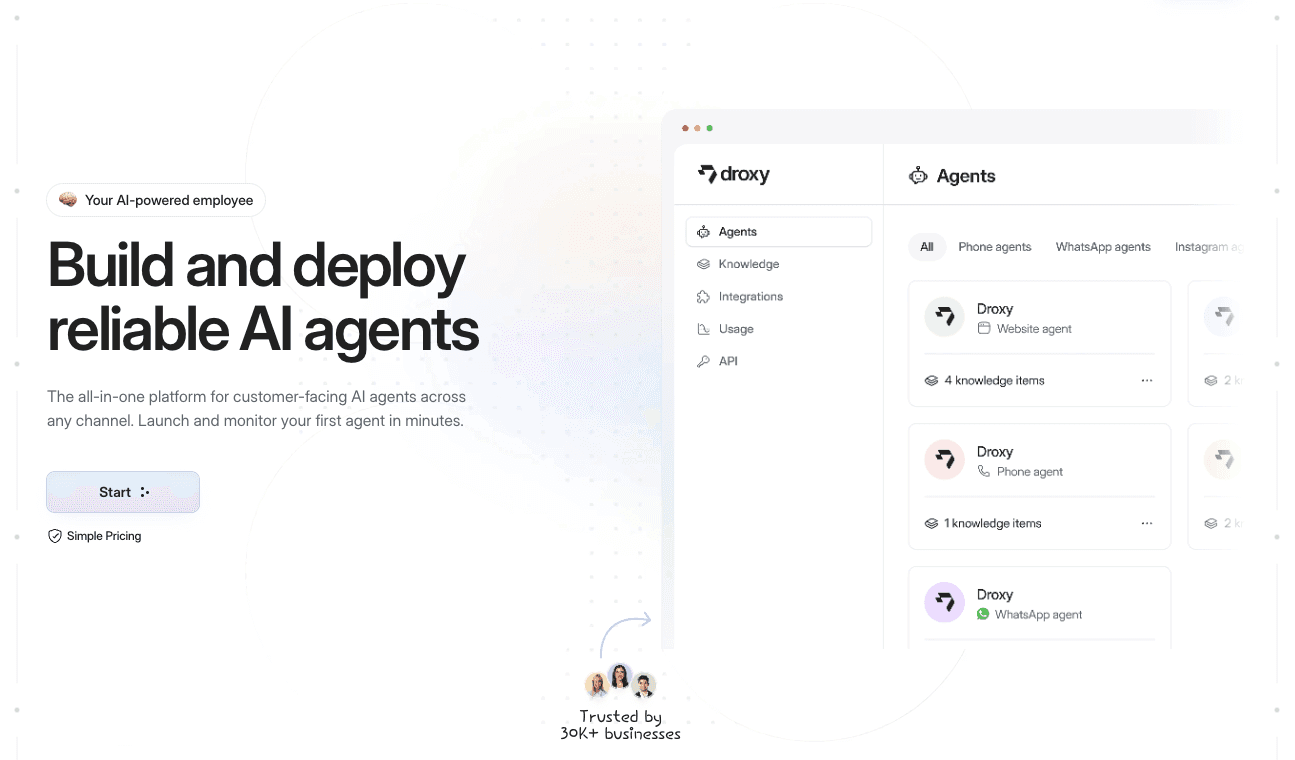
If you’re evaluating platforms, start with the AI powered Website agent or the AI powered Phone agent to see how triage and escalation work in practice, and check the Basic, Advanced, and Enterprise plans to find the tier that matches your volume. Before booking a demo, prepare questions about integration points with your existing CRM, governance controls for regulated industries, and what SLA support looks like once you’re past the pilot phase. Agencies managing multiple clients can also explore white-label options for agencies built into the same platform.
Sources
Designing for trust, progress, and dignity in AI-enabled service systems — MDPI (2026)
Building Customer Support AI Agents at 100M-User Scale — arXiv
FAQ
What Is 24/7 Support?
24/7 support is continuous customer service availability across every day of the year, typically delivered through a combination of AI-handled triage and human escalation rather than staff working around the clock in shifts. The layered model lets routine questions get answered instantly while complex issues route to a person during working hours or through follow-the-sun coverage.
Is There a 24-Hour Helpline Chat Service Available?
Most businesses offering true round-the-clock coverage run an AI-powered chat agent as the first point of contact, available at any hour, with human agents handling escalated cases. Droxy’s AI powered Website agent is built specifically for this always-available first response layer.
How Do I Speak to a Live Customer Service Agent?
Most 24/7 systems include an escalation trigger, a specific phrase, a repeated failed resolution, or a direct request, that hands the conversation to a human agent. If a business operates on a layered model, that handoff usually happens with full conversation context already passed along, so you shouldn’t have to repeat your issue.
How Can I Talk to an Agent on Live Chat?
Type a clear request like “connect me with a person” or describe why the automated response isn’t solving your issue, and a well-designed system will escalate immediately rather than looping you through more automated replies. Businesses using platforms like Droxy configure this handoff rule directly into the agent’s escalation policy, so the transition happens without friction.
What Does Droxy Cost?
Droxy’s plans start at $16 per month for the Basic tier, with Advanced starting at $80 per month and Enterprise starting at $240 per month. Exact features per tier and any additional usage costs are listed on the pricing page.
Recommended
24/7 customer support means customers can reach your company any time, and the most practical way to deliver it is a layered model: AI triage for routine requests plus human escalation, adding follow-the-sun human teams only where volume justifies them. Skip the all-night call center until the math demands it. Start with a pilot, measure how often the AI resolves issues on its own, and expand from there.
TL;DR:
Implement AI triage first to handle high-volume routine requests, then expand to follow-the-sun support as regional volumes justify staffing costs.
Ensure your support system includes omnichannel routing, a knowledge base, and escalation rules to prevent context loss and maintain compliance.
Track key metrics like response times, first-contact resolution, and re-contact rates to prove continuous support effectiveness and customer satisfaction.
Avoid overinvesting in pure night shifts; wait for data confirming overnight demand before staffing around the clock.
Use no-code platforms like Droxy to deploy layered customer support efficiently and customize escalation paths without lengthy development cycles.
DroxyMake Support Available Around The ClockDeploy customized AI agents across your customer channels to answer inquiries instantly and help reduce wait times.Explore Droxy
Table of Contents
What Does 24/7 Customer Support Actually Mean?
What Are the Real Benefits of Always-Available Help?
Which 24/7 Support Model Fits Your Business?
What Technology Do You Need for Reliable Coverage?
How Do You Roll Out 24/7 Support Without Overbuilding?
What KPIs Actually Prove Your Support Is Working?
What Can Go Wrong, and How Do You Prevent It?
How Does a No-Code Platform Like Droxy Support This Model?
A Practitioner’s Take on Where Teams Overinvest
Ready to Build Your Layered Support Model?
Sources
What Does 24/7 Customer Support Actually Mean?
True round-the-clock support isn’t one employee with a laptop checking messages at 2 a.m. It means a defined system, spanning chat, email, phone, and social channels, that responds to every inquiry regardless of time zone, weekend, or holiday, with a documented path from first contact to resolution.
A lot of businesses believe they already offer 24/7 support because someone is “usually reachable.” That’s not continuous coverage. It’s improvisation, and it breaks the first time your one after-hours contact takes a vacation. Real coverage requires structured routing, a knowledge base the system can draw from, and clear rules for when a question gets escalated to a person.
Not every business needs full-time coverage on day one. A regional home services company might only need extended hours. A global ecommerce brand selling into different time zones usually needs it fast, because every unanswered message overnight is a missed sale or a frustrated customer by morning.
What Are the Real Benefits of Always-Available Help?
Wait time is the single weakest point in most customer service experiences, according to Qualtrics XM Institute’s global consumer research, and faster resolution directly increases customer loyalty and repeat purchase behavior. Close that gap and you change how customers feel about your brand before they even finish typing their question.
The benefits compound from there:
Higher conversion: customers who get a fast answer at 11 p.m. don’t abandon their cart and shop a competitor instead.
Lower churn: issues resolved on first contact build trust that carries into the next purchase.
Better reputation: public reviews and social mentions skew positive when response times shrink.
Improved staff experience: a follow-the-sun model, where different regional teams hand off shifts during daylight hours, avoids the burnout and turnover that plague single-location night shifts.
Pro Tip: Track how many customers who message after hours convert within 24 hours of getting a response. That single number often justifies the entire investment in continuous coverage.
Which 24/7 Support Model Fits Your Business?
Four models dominate the market, and each carries different cost, quality, and staffing trade-offs.
The AI-first layered model puts an AI agent in front of every inquiry, resolving routine questions instantly and escalating anything complex to a human during business hours. It’s the most cost-effective starting point for low-to-medium volume businesses, and it’s increasingly capable: Gartner projects that agentic AI will autonomously resolve a large share of common service issues within the next few years.
Follow-the-sun staffs human teams roughly eight hours apart around the globe, so someone is always working daytime hours somewhere. PITON-Global’s research shows this model beats single-location night shifts on both quality and retention, but it only pays off once regional volume justifies the overhead of local management.
Night-shift staffing, the traditional fallback, tends to produce higher error rates and turnover. Fatigue and isolation take a toll that shows up in your quality scores within months.
Hybrid approaches blend AI triage with follow-the-sun coverage in high-volume regions and human night shifts only where truly necessary.
Start AI-first if you’re under low message volume.
Move toward follow-the-sun once a region hits a volume break-even point that justifies dedicated local staff.
Avoid pure night shifts unless volume is too low to justify a second region but too unpredictable for AI alone.
What Technology Do You Need for Reliable Coverage?
Continuous support only works when the underlying systems hold up under pressure. Four components matter most.
Omnichannel routing with context persistence ensures a customer who starts on WhatsApp and follows up by phone doesn’t have to repeat themselves. Losing context between channels is one of the fastest ways to erode trust built by a fast first response.
A grounded knowledge base, often using retrieval-augmented generation (RAG), keeps AI answers tied to your actual policies and product data instead of generic guesses. This is how you avoid what researchers call “plausible error,” fluent-sounding answers that are simply wrong, a risk documented in service-design research on AI-enabled systems.
Orchestration and escalation rules define exactly when a conversation moves from AI to human, and structured orchestration frameworks have been shown to meaningfully improve policy adherence for AI agents handling support conversations.
Human-in-the-loop QA closes the loop:
Sample conversations regularly for accuracy and tone.
Score AI responses against your actual policy documents.
Route edge cases to a human reviewer before they become a pattern.
How Do You Roll Out 24/7 Support Without Overbuilding?
A phased rollout keeps costs predictable and lets you prove value before expanding.
Pilot AI triage first. Deploy an AI agent to handle your highest-volume Tier 0 and Tier 1 requests, order status, password resets, FAQs, and measure self-service rate (SSR) alongside transactional NPS (tNPS) from day one.
Build escalation and human handoff. Define the rules that push a conversation to a person, and make sure the human receives full context instead of starting from scratch.
Add follow-the-sun only where volume justifies it. Once a region’s ticket volume clears the break-even point for staffing overhead, expand human coverage there rather than everywhere at once.
Codify runbooks and handoff rituals. A common practice: the outgoing team clears its queue to a defined SLA threshold, and the incoming team runs a short synchronous review of any overnight priority incidents before taking over.
Check legal and regulatory requirements for your regions, particularly around data handling and AI disclosure, before scaling further.
Train staff on escalated cases specifically, not general customer service, since the conversations they receive are the ones AI couldn’t resolve.
Pro Tip: *Resist hiring for a night shift until your after-hours volume data justifies it.
What KPIs Actually Prove Your Support Is Working?
Five metrics matter more than the rest: time to first response, self-service rate (SSR), first-contact resolution (FCR), transactional NPS (tNPS), and re-contact rate.
Watch the tension between SSR and tNPS closely. Research on large-scale support AI deployments found that routing a frustrated customer to a human quickly often raises tNPS even when it lowers your automation rate. Chasing a high SSR number at the expense of customer sentiment is a losing trade.
Build your dashboard around these signals:
Time to first response, tracked separately for AI and human-handled conversations.
FCR, since Qualtrics data confirms it’s one of the strongest predictors of customer loyalty.
Re-contact rate, which flags cases the AI marked resolved but weren’t.
SLA adherence alerts, triggered whenever response times drift past your target window.
What Can Go Wrong, and How Do You Prevent It?
Governance gaps are the most common failure point. Research on agentic AI deployment identifies governance as the primary barrier to scaling AI support safely, recommending boundary monitoring aligned with regional rules like GDPR.
The practical risks and fixes:
Plausible error (confident, wrong answers): mitigate with grounded knowledge sources, confidence thresholds that trigger human review, and periodic LLM-as-a-judge audits scoring conversations for accuracy.
Dropped handoffs: fix with shared CRM access and a mandatory context summary passed to every human agent.
Regulatory exposure: map every AI-handled workflow against your regional data and disclosure requirements before launch, not after.
Premature night-shift hiring: wait for volume data before staffing a location around the clock. Early hires often sit idle or burn out fast when overnight demand doesn’t match projections.
How Does a No-Code Platform Like Droxy Support This Model?
Droxy deploys AI agents across website chat, phone, WhatsApp, Instagram, Facebook, and Shopify from a single no-code platform, matching the layered approach this article recommends: AI handles routine volume, humans step in when it matters. Deep customization keeps responses aligned with your brand voice, while built-in analytics show exactly where automation is working and where it isn’t.
Businesses using Droxy report improved engagement, reduced wait times, and higher lead conversion, with more than 60,000 users currently running their customer interactions through the platform. Human hand-off and knowledge-base integration are built in, so the escalation path described earlier in this article isn’t a custom project. It’s a configuration.
A Practitioner’s Take on Where Teams Overinvest
Most businesses overbuild the wrong layer first. The sequencing matters more than the tooling.
Three moves worth making this quarter: pilot AI triage on your highest-volume request type, write down your escalation runbook even if it’s rough, and set a tNPS target before you optimize for automation rate. Get the order right and the rest follows.
— Elena
Ready to Build Your Layered Support Model?
Droxy gives you a working AI-first triage layer without hiring a development team or waiting months for integration. You get website, phone, WhatsApp, Instagram, and Facebook agents running from one dashboard, each trained on your own knowledge base and configured to hand off to a human exactly when your escalation rules say to.
If you’re evaluating platforms, start with the AI powered Website agent or the AI powered Phone agent to see how triage and escalation work in practice, and check the Basic, Advanced, and Enterprise plans to find the tier that matches your volume. Before booking a demo, prepare questions about integration points with your existing CRM, governance controls for regulated industries, and what SLA support looks like once you’re past the pilot phase. Agencies managing multiple clients can also explore white-label options for agencies built into the same platform.
Sources
Designing for trust, progress, and dignity in AI-enabled service systems — MDPI (2026)
Building Customer Support AI Agents at 100M-User Scale — arXiv
FAQ
What Is 24/7 Support?
24/7 support is continuous customer service availability across every day of the year, typically delivered through a combination of AI-handled triage and human escalation rather than staff working around the clock in shifts. The layered model lets routine questions get answered instantly while complex issues route to a person during working hours or through follow-the-sun coverage.
Is There a 24-Hour Helpline Chat Service Available?
Most businesses offering true round-the-clock coverage run an AI-powered chat agent as the first point of contact, available at any hour, with human agents handling escalated cases. Droxy’s AI powered Website agent is built specifically for this always-available first response layer.
How Do I Speak to a Live Customer Service Agent?
Most 24/7 systems include an escalation trigger, a specific phrase, a repeated failed resolution, or a direct request, that hands the conversation to a human agent. If a business operates on a layered model, that handoff usually happens with full conversation context already passed along, so you shouldn’t have to repeat your issue.
How Can I Talk to an Agent on Live Chat?
Type a clear request like “connect me with a person” or describe why the automated response isn’t solving your issue, and a well-designed system will escalate immediately rather than looping you through more automated replies. Businesses using platforms like Droxy configure this handoff rule directly into the agent’s escalation policy, so the transition happens without friction.
What Does Droxy Cost?
Droxy’s plans start at $16 per month for the Basic tier, with Advanced starting at $80 per month and Enterprise starting at $240 per month. Exact features per tier and any additional usage costs are listed on the pricing page.
Recommended


🚀
Powered by Droxy
Turn every interaction into a conversion
Customer facing AI agents that engage, convert, and support so you can scale what matters.
✨
Learn more
Recent posts
Insights
3 min read
Introducing Agent Memories
Improve your agents' performance with Agent Memories. Prevent agents from repeating the same mistakes by giving them feedback.
Read more

Insights
15 min read
HVAC Marketing in 2025: The Definitive Lead Gen Guide
Discover 15 proven HVAC marketing strategies, plus learn how Droxy's AI website agent converts curious visitors into qualified leads by answering their questions instantly - right when they're most interested in your services.
Read more
Insights
10 min read
10 Best AI Sales Agents in 2025: Tested & Ranked
Discover the top 10 AI sales agents of 2025, designed to enhance lead generation, personalize outreach, and ultimately, close more deals
Read more
Insights
3 min read
Introducing Agent Memories
Improve your agents' performance with Agent Memories. Prevent agents from repeating the same mistakes by giving them feedback.
Read more
Insights
15 min read
HVAC Marketing in 2025: The Definitive Lead Gen Guide
Discover 15 proven HVAC marketing strategies, plus learn how Droxy's AI website agent converts curious visitors into qualified leads by answering their questions instantly - right when they're most interested in your services.
Read more