Chatbot Privacy Policy: 7 Clauses Developers Must Include
Chatbot Privacy Policy: 7 Clauses Developers Must Include
Insights
12 min

Most chatbots that collect, store, or process personal data need a privacy policy, and if yours logs conversations, connects to a CRM, or feeds a model, that requirement almost certainly applies to you. The most important triggers are GDPR’s DPIA rules and consumer notice laws in states like California. Your first move: map exactly what data your bot touches, then add a plain-language disclosure to its very first message.
TL;DR:
Chatbots that store or process conversation logs, link to user accounts, or feed data into models generally require a privacy policy and explicit user disclosures.
For high-risk processing like model training, special data types, or large-scale profiling, clear consent and detailed documentation are mandatory.
Laws such as GDPR, CalOPPA, PIPEDA, and the Australian Privacy Act heavily influence chatbot privacy obligations, especially for cross-border or sensitive data.
Specific policy content should include data types, lawful basis, third-party sharing, user rights, retention periods, and age restrictions, with disclosures made at the start of conversations.
Implementing technical privacy controls like redaction, data retention limits, and separation of training from inference is crucial to make policies genuinely effective.
DroxyBuild More Thoughtful AI InteractionsDeploy customizable AI agents across your key channels, with instant answers that match your brand’s voice and support customer conversations.Explore Droxy
Table of Contents
When does a chatbot actually need a privacy policy?
Key privacy laws that shape your chatbot policy
What to include in a chatbot privacy policy
How to disclose and manage consent in real time
Vetting your model provider: questions and contract terms
Turning compliance requirements into team tasks
Privacy-by-design beats a longer legal document
Where Droxy fits if you want built-in privacy controls
Where to go for deeper regulator guidance
Sources
When does a chatbot actually need a privacy policy?
A purely informational bot that answers FAQs without storing identifiable inputs carries low risk. The moment your chatbot stores chat logs, links to a user account, accepts file uploads, or feeds a model, you have moved into territory that almost always requires disclosure.
Certain signals push a deployment from low risk to high risk fast:
Model training on user inputs: if conversation data trains or fine-tunes a model, you need explicit disclosure and often opt-in consent.
Special category data: health questions, financial details, or anything touching protected characteristics raises the compliance bar significantly.
Large-scale profiling: bots that build behavioral profiles for marketing or scoring purposes trigger stricter transparency duties.
Account linking or payments: connecting chat sessions to a customer record or transaction history means you are processing identifiable data at scale.
For most businesses, a dedicated chatbot section within the main privacy policy works better than a standalone document. It keeps disclosures consistent while letting you address channel-specific quirks like voice transcription or WhatsApp metadata.
Key privacy laws that shape your chatbot policy
Your obligations depend heavily on where your users live, not just where your company is based. A handful of frameworks come up again and again.
GDPR (EU/EEA): Articles 13 and 14 require transparency about what you collect and why, you need a documented lawful basis for each processing purpose, and ICO guidance on AI and data protection notes that many AI chatbot deployments likely count as high-risk processing under Article 35, which means a Data Protection Impact Assessment.
US state laws (CalOPPA and successors): California’s CalOPPA set the template that other states have followed, requiring clear disclosure of what is collected and how users can request changes.
Canada (PIPEDA): consent-based collection with a focus on meaningful, understandable disclosure rather than buried legal text.
Australia (Privacy Act): similar transparency expectations, plus specific rules on cross-border data transfers when a vendor or model provider is hosted overseas.
If your bot handles minors, sensitive health data, or hosts data across borders, loop in local counsel early. These are the areas where generic policy templates fall apart fastest.
What to include in a chatbot privacy policy
Once you know a policy is required, the content needs to be specific rather than generic. Vague boilerplate will not satisfy regulators or savvy users.
Scope and channels: name every surface your bot runs on, whether that’s website chat, SMS, WhatsApp, or voice, and state whether this policy stands alone or sits inside your main privacy policy.
Data types collected: list conversation text, file uploads, metadata like timestamps and device identifiers, and any cookies used to persist sessions.
Purpose and lawful basis: for each use, service delivery, analytics, or model improvement, state whether you rely on consent, contract, or legitimate interest, as ICO guidance on lawful basis recommends documenting per processing operation.
Third-party sharing: name model providers, human reviewers, and analytics vendors, along with how long each retains data.
User rights and process: explain access, correction, deletion, portability, and objection rights, with a working link or contact method.
Retention and deletion: state concrete windows, not vague terms like “as long as necessary.”
Age limits: state whether the bot is restricted to adults or has safeguards for minors.
Pro Tip: Write your first-message disclosure in one sentence: “You’re chatting with an AI assistant; your messages may be used to improve responses, and you can opt out anytime in settings.”
How to disclose and manage consent in real time
Disclosure works best when it happens exactly where the conversation starts, not buried three clicks away in a footer link.
First bot message: a single plain-language line stating the user is talking to AI and how their input may be used.
Consent modal for sensitive flows: when a bot handles payments or health questions, an explicit opt-in checkpoint before proceeding is safer than passive disclosure.
Persistent settings access: let users revisit and change their choices anytime, not just at session start.
Opting a user out of model training without breaking the bot’s core function usually means routing that session to a non-training pipeline, a pattern Stanford HAI’s research on chatbot privacy describes as increasingly common among frontier developers who separate live inference from training data collection.
Pro Tip: If your bot serves minors or asks age-sensitive questions, build an age gate that routes underage users to a restricted, non-personalized experience instead of blocking them outright.
Vetting your model provider: questions and contract terms
Your policy is only as trustworthy as your vendor’s actual practices. Before you sign anything, get clear answers.
Ask directly: does the vendor use chat inputs to train models, what are the exact retention periods, and do humans ever review transcripts?
Demand a data processing agreement: it should list subprocessors, breach notification timelines, and a documented deletion or purge process.
Require technical controls: pseudonymization, redaction of sensitive fields, a private or non-training model option, and audit logs you can actually inspect.
Our guide on how to train a chatbot covers how training pipelines are typically structured, which helps when you’re evaluating whether a vendor’s non-training mode is real separation or just a marketing label.
Turning compliance requirements into team tasks
Legal language means nothing until someone on your team owns the follow-through.
Run a DPIA when your bot involves high-risk processing: document the purpose, data categories, a risk matrix, and mitigations, then keep a summary ready if a regulator asks, following the structure ICO guidance on AI and data protection outlines.
Maintain a Record of Processing Activities (ROPA) specific to your chatbot flows, not a generic company-wide document.
Build deletion workflows that actually execute erasure requests across your database and any vendor systems, per NIST’s AI risk and privacy guidance on technical purge capability.
Set up breach monitoring with a clear notification timeline and minimize how much a human ever needs to review.
Privacy-by-design beats a longer legal document
The policy text matters less than whether your engineering choices back it up. Redaction, retention limits, and a genuine non-training mode make a privacy policy true rather than aspirational. Treat your DPIA and ROPA as living documents that update every time your data flows change, not a one-time filing exercise. The real tension isn’t legal versus technical, it’s balancing model improvement goals against what users actually expect when they type a message.
— Elena
Where Droxy fits if you want built-in privacy controls
Building and maintaining all of this yourself takes real engineering time, which is where a platform with privacy controls already built in saves effort. There are no-code platforms for deploying AI agents across website chat, phone, WhatsApp, Instagram, and Facebook that offer customization options supporting retention settings and redaction workflows as part of the setup, reflecting key ChatGPT statistics on usage and market share that highlight the widespread adoption driving privacy concerns.
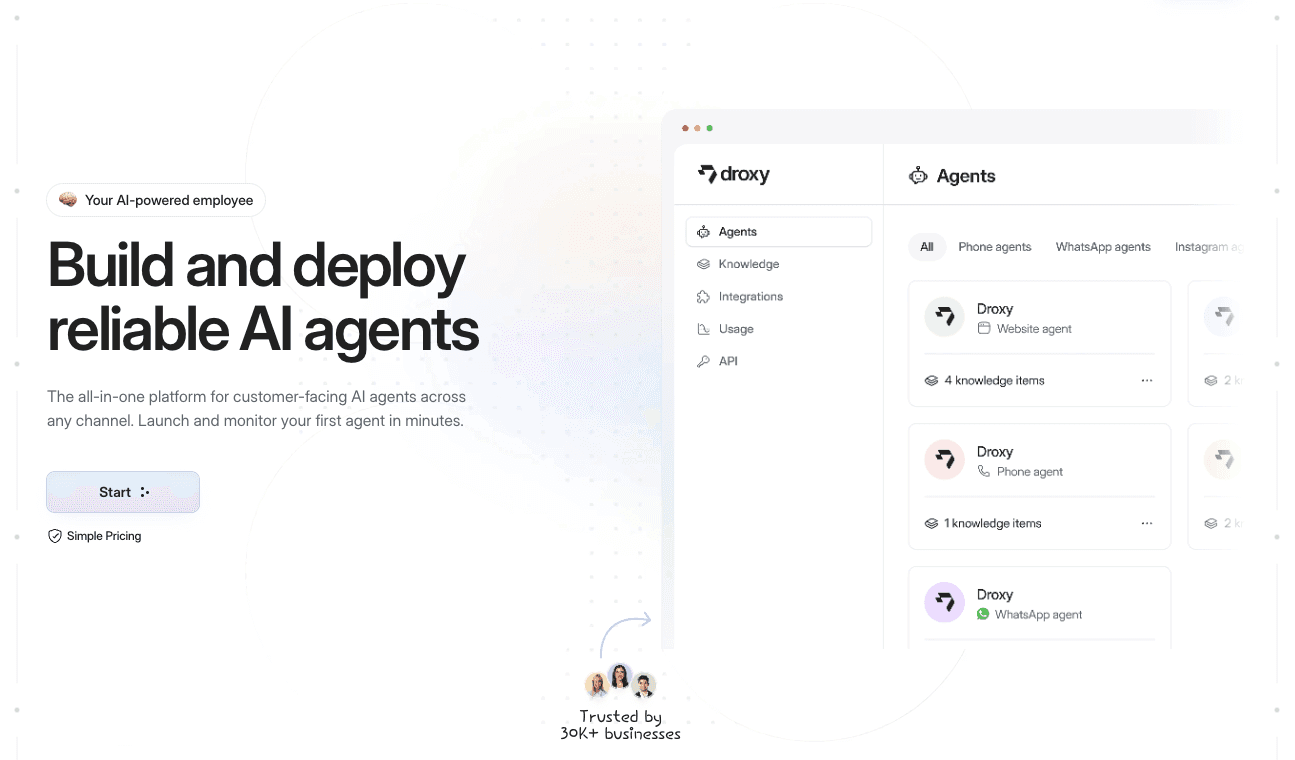
If you’re weighing a chatbot platform with privacy and compliance features baked into the deployment process, our website agent and WhatsApp agent product pages outline what’s configurable, and our pricing page lists Basic, Advanced, and Enterprise plans for teams ready to get started.
Where to go for deeper regulator guidance
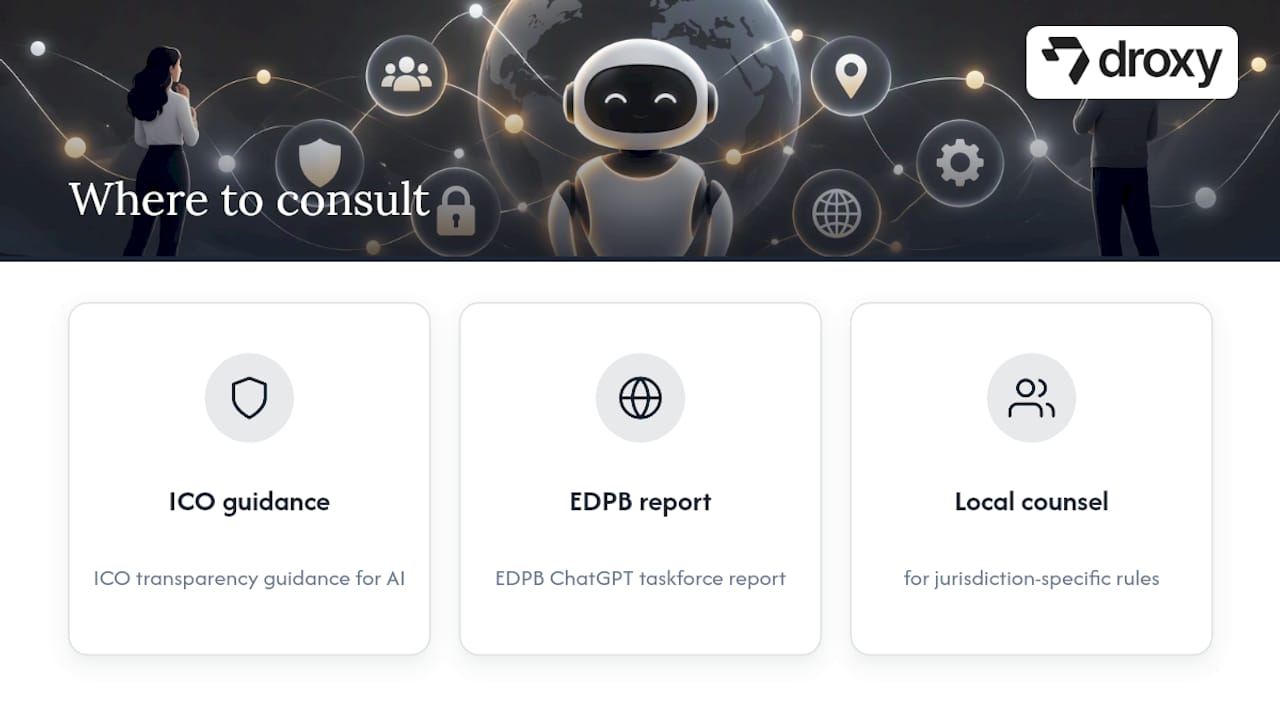
For jurisdiction-specific rules, consult the ICO’s transparency guidance for AI, the EDPB’s ChatGPT taskforce report, and local counsel.
Sources
FAQ
Are chatbot conversations private?
Chatbot conversations are generally not fully private in the way a personal message might be, since providers often log inputs for quality, analytics, or model training. Whether a specific vendor uses your conversation data depends on their retention and training policies, which the EDPB ChatGPT taskforce report recommends disclosing clearly to users.
What shouldn’t you share with ChatGPT?
Avoid sharing sensitive personal details like health information, financial account numbers, passwords, or anything tied to someone else’s identity without consent. Stanford HAI’s research found that several leading AI developers use chat inputs for model training by default, so treat any chatbot input as potentially retained.
Will ChatGPT leak my data?
There’s no evidence that ChatGPT leaks user data to other users in normal operation, but inputs may be retained, reviewed by humans, or used for training depending on account settings. Checking the opt-out options in your account settings is the most direct way to limit how your data gets used.
What is ChatGPT’s privacy policy?
ChatGPT’s privacy policy covers what data OpenAI collects, how long it’s retained, and what training and opt-out choices are available, and it’s published on OpenAI’s own site rather than summarized elsewhere. For the current terms, check OpenAI’s official privacy policy directly since these details change as products update.
Does every chatbot need a Data Protection Impact Assessment?
Not every chatbot needs a full DPIA, but ICO guidance notes that many AI deployments count as high-risk processing under Article 35, which triggers the requirement. Even when a full DPIA isn’t mandatory, documenting a lightweight risk assessment shows accountability if a regulator asks.
Recommended
Most chatbots that collect, store, or process personal data need a privacy policy, and if yours logs conversations, connects to a CRM, or feeds a model, that requirement almost certainly applies to you. The most important triggers are GDPR’s DPIA rules and consumer notice laws in states like California. Your first move: map exactly what data your bot touches, then add a plain-language disclosure to its very first message.
TL;DR:
Chatbots that store or process conversation logs, link to user accounts, or feed data into models generally require a privacy policy and explicit user disclosures.
For high-risk processing like model training, special data types, or large-scale profiling, clear consent and detailed documentation are mandatory.
Laws such as GDPR, CalOPPA, PIPEDA, and the Australian Privacy Act heavily influence chatbot privacy obligations, especially for cross-border or sensitive data.
Specific policy content should include data types, lawful basis, third-party sharing, user rights, retention periods, and age restrictions, with disclosures made at the start of conversations.
Implementing technical privacy controls like redaction, data retention limits, and separation of training from inference is crucial to make policies genuinely effective.
DroxyBuild More Thoughtful AI InteractionsDeploy customizable AI agents across your key channels, with instant answers that match your brand’s voice and support customer conversations.Explore Droxy
Table of Contents
When does a chatbot actually need a privacy policy?
Key privacy laws that shape your chatbot policy
What to include in a chatbot privacy policy
How to disclose and manage consent in real time
Vetting your model provider: questions and contract terms
Turning compliance requirements into team tasks
Privacy-by-design beats a longer legal document
Where Droxy fits if you want built-in privacy controls
Where to go for deeper regulator guidance
Sources
When does a chatbot actually need a privacy policy?
A purely informational bot that answers FAQs without storing identifiable inputs carries low risk. The moment your chatbot stores chat logs, links to a user account, accepts file uploads, or feeds a model, you have moved into territory that almost always requires disclosure.
Certain signals push a deployment from low risk to high risk fast:
Model training on user inputs: if conversation data trains or fine-tunes a model, you need explicit disclosure and often opt-in consent.
Special category data: health questions, financial details, or anything touching protected characteristics raises the compliance bar significantly.
Large-scale profiling: bots that build behavioral profiles for marketing or scoring purposes trigger stricter transparency duties.
Account linking or payments: connecting chat sessions to a customer record or transaction history means you are processing identifiable data at scale.
For most businesses, a dedicated chatbot section within the main privacy policy works better than a standalone document. It keeps disclosures consistent while letting you address channel-specific quirks like voice transcription or WhatsApp metadata.
Key privacy laws that shape your chatbot policy
Your obligations depend heavily on where your users live, not just where your company is based. A handful of frameworks come up again and again.
GDPR (EU/EEA): Articles 13 and 14 require transparency about what you collect and why, you need a documented lawful basis for each processing purpose, and ICO guidance on AI and data protection notes that many AI chatbot deployments likely count as high-risk processing under Article 35, which means a Data Protection Impact Assessment.
US state laws (CalOPPA and successors): California’s CalOPPA set the template that other states have followed, requiring clear disclosure of what is collected and how users can request changes.
Canada (PIPEDA): consent-based collection with a focus on meaningful, understandable disclosure rather than buried legal text.
Australia (Privacy Act): similar transparency expectations, plus specific rules on cross-border data transfers when a vendor or model provider is hosted overseas.
If your bot handles minors, sensitive health data, or hosts data across borders, loop in local counsel early. These are the areas where generic policy templates fall apart fastest.
What to include in a chatbot privacy policy
Once you know a policy is required, the content needs to be specific rather than generic. Vague boilerplate will not satisfy regulators or savvy users.
Scope and channels: name every surface your bot runs on, whether that’s website chat, SMS, WhatsApp, or voice, and state whether this policy stands alone or sits inside your main privacy policy.
Data types collected: list conversation text, file uploads, metadata like timestamps and device identifiers, and any cookies used to persist sessions.
Purpose and lawful basis: for each use, service delivery, analytics, or model improvement, state whether you rely on consent, contract, or legitimate interest, as ICO guidance on lawful basis recommends documenting per processing operation.
Third-party sharing: name model providers, human reviewers, and analytics vendors, along with how long each retains data.
User rights and process: explain access, correction, deletion, portability, and objection rights, with a working link or contact method.
Retention and deletion: state concrete windows, not vague terms like “as long as necessary.”
Age limits: state whether the bot is restricted to adults or has safeguards for minors.
Pro Tip: Write your first-message disclosure in one sentence: “You’re chatting with an AI assistant; your messages may be used to improve responses, and you can opt out anytime in settings.”
How to disclose and manage consent in real time
Disclosure works best when it happens exactly where the conversation starts, not buried three clicks away in a footer link.
First bot message: a single plain-language line stating the user is talking to AI and how their input may be used.
Consent modal for sensitive flows: when a bot handles payments or health questions, an explicit opt-in checkpoint before proceeding is safer than passive disclosure.
Persistent settings access: let users revisit and change their choices anytime, not just at session start.
Opting a user out of model training without breaking the bot’s core function usually means routing that session to a non-training pipeline, a pattern Stanford HAI’s research on chatbot privacy describes as increasingly common among frontier developers who separate live inference from training data collection.
Pro Tip: If your bot serves minors or asks age-sensitive questions, build an age gate that routes underage users to a restricted, non-personalized experience instead of blocking them outright.
Vetting your model provider: questions and contract terms
Your policy is only as trustworthy as your vendor’s actual practices. Before you sign anything, get clear answers.
Ask directly: does the vendor use chat inputs to train models, what are the exact retention periods, and do humans ever review transcripts?
Demand a data processing agreement: it should list subprocessors, breach notification timelines, and a documented deletion or purge process.
Require technical controls: pseudonymization, redaction of sensitive fields, a private or non-training model option, and audit logs you can actually inspect.
Our guide on how to train a chatbot covers how training pipelines are typically structured, which helps when you’re evaluating whether a vendor’s non-training mode is real separation or just a marketing label.
Turning compliance requirements into team tasks
Legal language means nothing until someone on your team owns the follow-through.
Run a DPIA when your bot involves high-risk processing: document the purpose, data categories, a risk matrix, and mitigations, then keep a summary ready if a regulator asks, following the structure ICO guidance on AI and data protection outlines.
Maintain a Record of Processing Activities (ROPA) specific to your chatbot flows, not a generic company-wide document.
Build deletion workflows that actually execute erasure requests across your database and any vendor systems, per NIST’s AI risk and privacy guidance on technical purge capability.
Set up breach monitoring with a clear notification timeline and minimize how much a human ever needs to review.
Privacy-by-design beats a longer legal document
The policy text matters less than whether your engineering choices back it up. Redaction, retention limits, and a genuine non-training mode make a privacy policy true rather than aspirational. Treat your DPIA and ROPA as living documents that update every time your data flows change, not a one-time filing exercise. The real tension isn’t legal versus technical, it’s balancing model improvement goals against what users actually expect when they type a message.
— Elena
Where Droxy fits if you want built-in privacy controls
Building and maintaining all of this yourself takes real engineering time, which is where a platform with privacy controls already built in saves effort. There are no-code platforms for deploying AI agents across website chat, phone, WhatsApp, Instagram, and Facebook that offer customization options supporting retention settings and redaction workflows as part of the setup, reflecting key ChatGPT statistics on usage and market share that highlight the widespread adoption driving privacy concerns.
If you’re weighing a chatbot platform with privacy and compliance features baked into the deployment process, our website agent and WhatsApp agent product pages outline what’s configurable, and our pricing page lists Basic, Advanced, and Enterprise plans for teams ready to get started.
Where to go for deeper regulator guidance
For jurisdiction-specific rules, consult the ICO’s transparency guidance for AI, the EDPB’s ChatGPT taskforce report, and local counsel.
Sources
FAQ
Are chatbot conversations private?
Chatbot conversations are generally not fully private in the way a personal message might be, since providers often log inputs for quality, analytics, or model training. Whether a specific vendor uses your conversation data depends on their retention and training policies, which the EDPB ChatGPT taskforce report recommends disclosing clearly to users.
What shouldn’t you share with ChatGPT?
Avoid sharing sensitive personal details like health information, financial account numbers, passwords, or anything tied to someone else’s identity without consent. Stanford HAI’s research found that several leading AI developers use chat inputs for model training by default, so treat any chatbot input as potentially retained.
Will ChatGPT leak my data?
There’s no evidence that ChatGPT leaks user data to other users in normal operation, but inputs may be retained, reviewed by humans, or used for training depending on account settings. Checking the opt-out options in your account settings is the most direct way to limit how your data gets used.
What is ChatGPT’s privacy policy?
ChatGPT’s privacy policy covers what data OpenAI collects, how long it’s retained, and what training and opt-out choices are available, and it’s published on OpenAI’s own site rather than summarized elsewhere. For the current terms, check OpenAI’s official privacy policy directly since these details change as products update.
Does every chatbot need a Data Protection Impact Assessment?
Not every chatbot needs a full DPIA, but ICO guidance notes that many AI deployments count as high-risk processing under Article 35, which triggers the requirement. Even when a full DPIA isn’t mandatory, documenting a lightweight risk assessment shows accountability if a regulator asks.
Recommended


🚀
Powered by Droxy
Turn every interaction into a conversion
Customer facing AI agents that engage, convert, and support so you can scale what matters.
✨
Learn more
Recent posts
Insights
3 min read
Introducing Agent Memories
Improve your agents' performance with Agent Memories. Prevent agents from repeating the same mistakes by giving them feedback.
Read more

Insights
15 min read
HVAC Marketing in 2025: The Definitive Lead Gen Guide
Discover 15 proven HVAC marketing strategies, plus learn how Droxy's AI website agent converts curious visitors into qualified leads by answering their questions instantly - right when they're most interested in your services.
Read more
Insights
10 min read
10 Best AI Sales Agents in 2025: Tested & Ranked
Discover the top 10 AI sales agents of 2025, designed to enhance lead generation, personalize outreach, and ultimately, close more deals
Read more
Insights
3 min read
Introducing Agent Memories
Improve your agents' performance with Agent Memories. Prevent agents from repeating the same mistakes by giving them feedback.
Read more
Insights
15 min read
HVAC Marketing in 2025: The Definitive Lead Gen Guide
Discover 15 proven HVAC marketing strategies, plus learn how Droxy's AI website agent converts curious visitors into qualified leads by answering their questions instantly - right when they're most interested in your services.
Read more