11 Best AI Chat Bots For Your Business in 2026
11 Best AI Chat Bots For Your Business in 2026
Insights
30
Your customers expect instant answers at 3 AM, personalized recommendations that feel human, and conversations that solve problems without endless waiting. The right AI chatbot can transform these expectations into reality, but finding the best chatbot development platform that actually delivers on these promises requires cutting through endless marketing claims and feature lists. This guide will help you select and implement the perfect AI chatbot to automate customer service, boost sales, and scale your business effortlessly in 2026.
What if you could build a sophisticated AI agent without writing code or managing complex integrations? Droxy offers an AI agent for your business that turns your existing content into an intelligent conversational assistant, helping you achieve exactly what you need: automated customer support that feels personal, sales conversations that convert, and a system that grows with your business. The platform handles the technical complexity while you focus on what matters: connecting with customers and driving results.
Table of Contents
Summary
Modern AI chatbots resolve customer issues at a 70% success rate compared to just 30% for traditional rule-based systems, according to Gartner. This performance gap translates directly into fewer escalations, shorter wait times, and lower support costs, while also reducing the likelihood that frustrated customers abandon interactions entirely.
Customer service costs drop by up to 30% when businesses implement AI chatbots instead of relying solely on traditional support methods, IBM research shows. The savings come from higher resolution rates, reduced escalations, and the ability to handle more complex inquiries without human intervention, with efficiency gains often offsetting higher initial implementation costs over time.
AI chatbots handle up to 80% of routine customer service questions without human involvement, according to IBM. This triage happens seamlessly, allowing support teams to focus on high-impact interactions that require expertise or empathy while simple inquiries resolve instantly, transforming productivity by eliminating the need to cycle through dozens of basic questions to find the few that need real attention.
Immediate response capability has become a competitive requirement, with 64% of consumers identifying 24-hour service as the best feature of chatbots according to Tidio. Speed now functions as a proxy for competence, and businesses that can't respond in real time risk losing opportunities before they even know a customer was interested, as delayed responses signal indifference rather than legitimate unavailability.
Every customer conversation generates data about recurring questions, confusing processes, and friction points, but traditional support captures these insights slowly through scattered ticket systems and agent notes. AI chatbots log every exchange, categorize inquiries automatically, and surface trends in real time, turning customer interactions into a continuous feedback loop that reveals which questions shouldn't need asking in the first place.
An AI agent for your business addresses this by handling customer communications across all channels in real time, converting leads that would otherwise disappear due to delayed responses or limited availability.
What is an AI Chatbot, and How Does It Work?

An AI chatbot is software that simulates conversation through text or voice, using artificial intelligence to interpret questions, understand context, and generate responses that feel natural. Unlike older systems that relied on rigid scripts, these tools process language dynamically, learning from interactions to improve accuracy over time. They operate across websites, messaging apps, and phone lines, handling everything from simple FAQs to complex customer inquiries without requiring a human on the other end.
The distinction matters because modern chatbots don't just match keywords to canned replies. They analyze intent, extract meaning from messy input, and adapt their tone based on the situation. This capability transforms them from basic responders into systems that can actually hold a conversation, remember what was said earlier, and adjust based on the user's next need. That shift from mechanical to conversational is what makes them valuable for businesses trying to meet customer expectations in real time.
How AI Chatbots Evolved From Scripts to Strategy
Early chatbots from the 1960s operated like decision trees, matching user inputs to predefined branches and spitting out rehearsed answers. They worked fine for narrow tasks, like checking account balances or confirming store hours, but collapsed the moment someone asked a question outside the script. A single typo or an unexpected phrasing would derail the entire exchange, leaving users frustrated and forcing them to contact human support.
The breakthrough came when machine learning entered the picture. Instead of programming every possible response, developers trained models on massive datasets of real conversations, teaching systems to recognize patterns and generate original replies. This approach enabled chatbots to handle ambiguity, interpret slang, and even detect emotional cues such as frustration and urgency. The result is a tool that doesn't just answer questions but understands what's being asked, even when the phrasing is imperfect.
Today's systems combine multiple technologies to create seamless interactions. Natural language processing breaks down sentences into components, identifying what the user wants and what information matters. Machine learning refines predictions based on historical data, while generative AI produces responses that sound human rather than robotic. Together, these layers create a chatbot that feels less like a vending machine and more like a knowledgeable assistant who's paying attention.
The Technologies That Make Conversations Work
Natural language processing sits at the core, enabling chatbots to parse grammar, extract intent, and identify key details from user input. It's the difference between a system that recognizes "I need help with my order" and one that understands "My package still hasn't arrived and I'm leaving town tomorrow." The first is a category; the second is a problem with urgency attached. Processing that nuance requires algorithms that go beyond word matching to grasp context and priority.
Machine learning adds adaptability. Each interaction feeds data back into the system, refining how it interprets similar questions in the future. If a chatbot misunderstands a query about refunds, the correction trains it to handle that phrasing better next time. This feedback loop means performance improves without manual reprogramming, turning every conversation into a learning opportunity that compounds over time.
Generative AI, including large language models, brings creativity to the mix. Instead of pulling from a library of pre-written responses, these systems compose answers on the fly, drawing from learned patterns to produce replies that fit the specific situation. This capability allows chatbots to handle open-ended questions, explain complex topics, and even adjust tone based on the user's mood. The result is a conversation that feels fluid rather than formulaic, keeping users engaged rather than prompting them to search for the "speak to a human" button.
How an AI Chatbot Processes a Conversation
The process starts when a user sends a message through a chat interface, whether on a website, app, or messaging platform. The system tokenizes the input, breaking it into manageable units like words or phrases, then runs it through understanding mechanisms to classify intent and extract relevant entities. If someone types "Can I return this jacket?" the chatbot identifies "return" as the intent and "jacket" as the subject, then cross-references order history to provide a specific answer rather than a generic policy statement.
Next comes response generation. The chatbot pulls from its knowledge base, which might include product catalogs, support documentation, or past interactions, to craft a reply that addresses the user's question. Generative tools shape the language so it sounds conversational rather than mechanical, adjusting tone based on context. If the user seems frustrated, the response might include an apology or an offer to escalate the issue. If they're just browsing, the tone stays informative without feeling pushy.
The cycle closes with delivery and learning. The chatbot sends the response, monitors whether the user follows up or exits, and logs the interaction for future reference. If the conversation ends successfully, the system reinforces the approach it took. If the user asks for clarification or requests a human, that signals a gap worth addressing. Over time, these iterations refine the chatbot's ability to handle increasingly complex interactions while maintaining conversation flow, turning raw interactions into structured intelligence.
Why Immediate Responses Have Become Non-Negotiable
Customer expectations have shifted faster than most businesses realize. 64% of consumers say 24-hour service is the best feature of chatbots, reflecting a fundamental change in how people evaluate service quality. Waiting hours for an email reply or days for a callback no longer feels acceptable when competitors answer questions instantly. Speed has become a proxy for competence, and businesses that can't respond in real time risk losing opportunities before they even know a customer was interested.
The gap between expectations and reality results in tangible revenue loss. When a potential customer asks about pricing or availability and receives no immediate answer, they move on. The assumption isn't that you're busy; it's that you don't care or can't deliver. This perception compounds across every missed interaction, turning slow response times into a competitive disadvantage that's hard to recover from once customers have found alternatives.
Platforms like an AI agent for your business address this by handling customer communications across all channels in real time, ensuring no inquiry goes unanswered, regardless of when it arrives. The system manages website chat, messaging apps, phone calls, and social media comments simultaneously, converting leads that would otherwise slip through the cracks due to limited availability or resource constraints. This approach doesn't just improve response times; it fundamentally changes how businesses capture and convert interest before it evaporates.
Where Rule-Based Systems Still Show Up
Some chatbots still operate on fixed logic, responding to specific keywords or commands with predetermined outputs. These rule-based systems excel in controlled environments where predictability matters more than flexibility, like routing support tickets to the right department or confirming appointment times. They're fast, reliable, and easy to audit because every response follows a documented path. The tradeoff is rigidity. Ask a question slightly differently than expected, and the system either guesses wrong or admits it doesn't understand.
Hybrid models combine rule-based structure with AI adaptability, using scripts for routine tasks and machine learning for complex queries. This approach balances efficiency with intelligence, letting businesses automate repetitive interactions without sacrificing the ability to handle nuanced conversations. The system knows when to follow a script and when to improvise, reducing friction for users who just want a quick answer while still supporting those with more complicated needs.
The choice between rule-based and conversational AI isn't about one being better; it's about matching the tool to the task. If your customers ask the same ten questions repeatedly, a rule-based system might suffice. If inquiries vary widely and context matters, AI becomes necessary. Most businesses land somewhere in between, needing both structure for common scenarios and flexibility for everything else.
But understanding the mechanics is only half the picture; knowing when each approach actually works changes how you think about implementation.
AI Chatbots vs. Traditional Chatbots

Traditional chatbots follow scripts and keyword triggers, handling only what they've been explicitly programmed to recognize. AI chatbots process language dynamically, interpreting intent and context to generate responses that adapt to each conversation. The gap between these approaches determines whether your customer interactions feel helpful or mechanical, which directly affects whether people stay engaged or abandon the conversation entirely.
Response Flexibility and Conversation Flow
Rule-based systems work like telephone menus. Press one for sales, two for support, three for everything else. They match user inputs to predefined paths, delivering answers only when the phrasing aligns with programmed triggers. Type "refund policy," and you get the policy. Type "I need my money back because this product broke," and the system might not recognize the request at all, forcing you to rephrase or start over. That friction compounds quickly when customers need help, not a guessing game.
AI-powered systems interpret what you mean, not just what you type. They parse sentence structure, extract intent, and maintain context across multiple exchanges. If someone asks about returns, then mentions a specific order number three messages later, the AI connects those details without requiring the user to repeat themselves. This continuity mirrors how humans actually communicate, reducing the cognitive load on customers who just want their problem solved.
The difference becomes most apparent when conversations deviate from expected patterns. Traditional chatbots break. AI chatbots adapt by using learned patterns to handle variations in phrasing, slang, and incomplete information. That adaptability keeps conversations moving forward instead of stalling on technicalities, which matters when speed determines whether someone completes a purchase or closes the tab.
Learning Capability and Long-Term Performance
Traditional chatbots remain static unless developers manually update them. Every new product launch, policy change, or common customer question requires someone to write new rules, test paths, and deploy updates. That maintenance burden grows with business complexity, turning what seemed like a simple automation into an ongoing development project that consumes resources without improving on its own.
AI systems learn from interactions. Each conversation feeds data back into the model, refining how it interprets similar questions in the future. If customers frequently ask about shipping times using phrases the system initially struggled with, it adjusts its understanding of those phrases. This self-improvement reduces the need for constant manual tuning, allowing the chatbot to handle emerging topics or shifting customer behaviors without waiting for a developer to intervene.
The compounding effect of this learning widens the performance gap over time. A rule-based chatbot on day one performs identically to that same chatbot six months later. An AI chatbot improves with volume, becoming more accurate and contextually aware as it processes more conversations. That trajectory matters when you're trying to scale support without increasing headcount in proportion.
Handling Ambiguity and Complex Requests
Traditional chatbots excel at straightforward, high-volume tasks with predictable inputs. Checking order status, confirming business hours, or directing users to the right department all work well when the questions follow expected formats. But introduce ambiguity (like "My package seems lost" or "I got charged twice but only received one item") and these systems struggle, often defaulting to generic responses or immediately escalating to human agents.
AI chatbots manage nuance by analyzing intent deeply and cross-referencing multiple data sources in real time. They draw on knowledge bases, order histories, and support documentation to craft tailored answers to specific situations. If someone describes a problem without using exact product names or error codes, the system infers what they're referring to from context clues and provides relevant solutions rather than asking the user to clarify every detail first.
According to Gartner, traditional rule-based chatbots have a 30% success rate in resolving customer issues compared to 70% for AI-powered chatbots. That gap translates directly into customer satisfaction and operational efficiency. Lower resolution rates mean more escalations, longer wait times, and higher support costs, while also increasing the likelihood that frustrated customers abandon the interaction entirely.
Natural Language Understanding and Personalization
Rule-based systems force users into structured flows, presenting buttons or multiple-choice options that constrain how people can ask questions. This approach works for simple navigation, but it feels restrictive when someone has a unique problem that doesn't fit neatly into predefined categories. The conversation becomes a series of forced choices rather than a natural exchange, creating friction and signaling to the user that the system isn't really listening.
AI chatbots process natural language without requiring users to conform to rigid formats. People can type full sentences, ask follow-up questions, or change topics mid-conversation, and the system adjusts accordingly. This flexibility mirrors how customers interact with human support agents, making the experience feel less like troubleshooting a machine and more like getting help from someone who understands the problem.
Personalization deepens this effect. AI systems remember previous interactions, preferences, and account details, using that context to tailor responses. If a returning customer asks about an order, the chatbot can reference their purchase history without making them provide order numbers or repeat information they've already shared. That continuity builds trust and reduces the effort required to get help, which directly affects whether people choose to engage with the chatbot or request a human immediately.
Cost Structure and Implementation Realities
Traditional chatbots typically require lower upfront investment. Building decision trees and scripting responses takes time, but doesn't demand advanced infrastructure or specialized expertise. For businesses with limited budgets or very specific, narrow use cases, this simplicity can make sense. The system does exactly what it's told, nothing more, which provides predictability even if it sacrifices capability.
AI chatbots demand greater initial resources for training, integration, and fine-tuning. You're not just writing scripts; you're feeding the system data, testing its understanding, and refining its responses until it performs reliably across diverse scenarios. That setup phase takes longer and costs more, which can feel like a barrier for organizations accustomed to faster, cheaper automation tools.
The ROI calculation shifts when you factor in long-term performance. AI chatbots reduce customer service costs by up to 30% compared to traditional support methods. Those savings come from higher resolution rates, fewer escalations, and the ability to handle more complex inquiries without human intervention. Over time, the efficiency gains and reduced need for manual updates often offset the higher starting costs, delivering better value as interaction volume grows.
Most businesses miss revenue not because they lack technology, but because they can't respond fast enough when interest peaks. Platforms like an AI agent for your business handle customer communications across all channels in real time, including website chat, messaging apps, phone calls, and social media comments. This approach converts leads that would otherwise disappear due to delayed responses or limited availability, turning speed into a competitive advantage rather than a constant operational challenge.
When Each Approach Actually Works
Rule-based chatbots still make sense for controlled environments where predictability trumps flexibility. Routing support tickets, confirming appointments, or answering a fixed set of FAQs all benefit from systems that follow documented paths without deviation. The simplicity reduces risk and makes auditing straightforward, which matters in regulated industries or scenarios where consistency is non-negotiable.
AI chatbots become necessary when inquiries vary widely, context matters, and customer expectations demand more than canned responses. E-commerce, financial services, healthcare, and any business that handles nuanced customer interactions benefit from systems that can interpret intent, retain context, and generate tailored responses. The investment pays off when the alternative is either hiring more support staff or accepting that a significant portion of customer inquiries won't be resolved satisfactorily.
Hybrid models combine both approaches, using rule-based logic for routine tasks and AI for everything else. This structure balances efficiency with intelligence, automating repetitive interactions without sacrificing the ability to handle complex conversations. The system knows when to follow a script and when to improvise, reducing friction for users who just want a quick answer while still supporting those with more complicated needs.
But knowing the differences only matters if you understand why businesses are adopting these systems in the first place.
Related Reading
Why Do Businesses Need AI Chatbots?

Businesses adopt AI chatbots because delayed responses directly cost revenue, and traditional support models can't scale to meet the expectation for instant, personalized interaction across every channel. When a potential customer asks about pricing at 11 PM, or a client needs help during a product launch spike, the business that answers immediately wins. The one who waits until morning loses the opportunity before they even know it existed.
This isn't about convenience anymore. It's about survival in markets where competitors provide 24/7 engagement, and customers interpret silence as indifference. The gap between what people expect and what most businesses deliver creates a revenue leak that compounds with every unanswered inquiry, abandoned cart, or frustrated user who moves on without waiting.
Scaling Support Without Scaling Headcount
Customer inquiry volume doesn't grow linearly. A product launch, seasonal spike, or viral social mention can triple support demand overnight. Traditional teams handle this by hiring more agents, extending shifts, or accepting that response times will stretch from minutes to hours or days. Each approach either bloats costs, burns out staff, or sacrifices the speed that keeps customers engaged.
AI systems absorb volume surges without additional resources. They handle hundreds of simultaneous conversations, pulling accurate answers from knowledge bases and routing complex cases to humans only when necessary. This means a team of five can support the inquiry load that previously required fifteen, not by working harder but by letting automation handle repetitive questions while humans focus on nuanced problems that actually need judgment.
The operational math shifts dramatically. Businesses can reduce customer service costs by up to 30% by implementing chatbots, according to IBM, because resolution happens faster, escalations drop, and the same team capacity suddenly covers far more ground. That efficiency doesn't just cut expenses. It frees budget and attention for improvements that manual support models never had bandwidth to pursue.
Capturing Revenue During Off-Hours
Most businesses operate during standard hours, but customer interest doesn't respect schedules. Someone researching software at midnight, comparing products on Sunday morning, or needing help during a holiday represents real revenue potential. If they can't get answers immediately, they find a competitor who can. The assumption isn't that you're closed. It's that you're not serious about their business.
This dynamic hits hardest in competitive markets, where alternatives are just a search away. E-commerce, SaaS, professional services, and any business relying on inbound leads all face the same challenge: interest peaks unpredictably, and the window to convert it closes fast. Waiting until the next business day to respond means the prospect has already moved on, signed with someone else, or lost the urgency that prompted their initial inquiry.
Platforms like an AI agent for your business continuously handle customer communications across all channels, managing website chat, messaging apps, phone calls, and social media comments without gaps. This approach converts leads that would otherwise disappear due to limited availability, turning every hour into productive selling time rather than accepting that nights and weekends represent lost opportunities.
Maintaining Consistency Across Channels
Customers don't think in terms of support channels. They ask questions wherever it's convenient (website chat, Instagram DM, email, phone) and expect the same quality regardless of medium. Traditional teams struggle with this because different channels often route to different people, each with varying knowledge levels, response styles, and access to customer history. The result is fragmented experiences where someone gets a detailed answer via email but a generic brush-off on social media.
AI chatbots unify responses by drawing from a single knowledge source, ensuring that the answer to "What's your return policy?" remains consistent whether asked on Facebook, your website, or through SMS. This eliminates the frustration of receiving conflicting information and the operational waste of maintaining separate support processes for each platform. One system, one source of truth, uniform quality everywhere.
The consistency extends beyond content to tone and timing. Customers receive the same level of attention at 3 AM as at 3 PM, and interaction quality doesn't degrade based on which agent picks up the conversation. This reliability builds trust faster than any marketing claim because it proves the business actually delivers on its promises every single time.
Reducing Human Bottlenecks in Qualification
Sales and support teams spend significant time answering questions that don't require human judgment: checking order status, confirming product specifications, explaining basic policies, or verifying eligibility. These interactions consume hours that could go toward closing deals or solving complex problems, but they can't be ignored because each represents a potential customer who needs attention.
Chatbots can handle up to 80% of routine customer service questions, according to IBM, meaning the majority of inquiries never require human involvement. AI systems answer instantly, pull relevant details from databases, and escalate only when the situation demands expertise or empathy that automation can't provide. This triage happens seamlessly, so customers get immediate help for simple needs while humans focus on conversations where they actually add value.
The shift transforms team productivity. Instead of cycling through fifty basic inquiries to find the five that need real attention, agents spend their time on high-impact interactions. Response quality improves because they're not rushing through repetitive questions to clear the queue. Customer satisfaction rises because simple problems resolve instantly, and complex ones receive focused, thoughtful support rather than divided attention.
Collecting Insights That Improve Operations
Every conversation generates data about what customers ask, how they phrase problems, which products confuse them, and where processes create friction. Traditional support captures some of this through ticket systems, but the insights remain scattered across agents' notes, email threads, and unstructured feedback. Patterns emerge slowly, if at all, because nobody has time to analyze thousands of interactions for recurring themes.
AI chatbots log every exchange, categorize inquiries automatically, and surface trends in real time. If fifty people ask the same question about shipping costs in a week, the system flags it as a knowledge gap worth addressing. If a specific product page causes confusion, the pattern becomes apparent immediately rather than weeks later, when someone finally reviews support metrics. This visibility turns customer interactions into a continuous feedback loop that drives improvements.
The operational value compounds over time. Businesses identify which FAQs actually matter, which policies need clearer communication, and which features cause the most friction. That intelligence informs everything from website copy to product development, creating a cycle in which better information reduces support load, freeing capacity to implement more improvements. The chatbot doesn't just answer questions. It reveals what questions shouldn't need asking in the first place.
But understanding why businesses adopt these systems matters only if you know how to implement one without the process consuming months of development time.
Related Reading
11 Best AI Chat Bots For Your Business in 2026
In 2026, AI chatbots have become essential tools for businesses seeking to streamline operations, enhance customer interactions, and boost productivity. These advanced systems go beyond basic scripted responses, leveraging powerful language models to handle complex queries, automate workflows, integrate with existing tools, and provide personalized support.
From general-purpose assistants to specialized agents for customer service, research, or automation, the right chatbot can reduce manual effort, improve response times, and drive efficiency across teams. Here are some of the leading options that stand out for business use this year.
1. Droxy
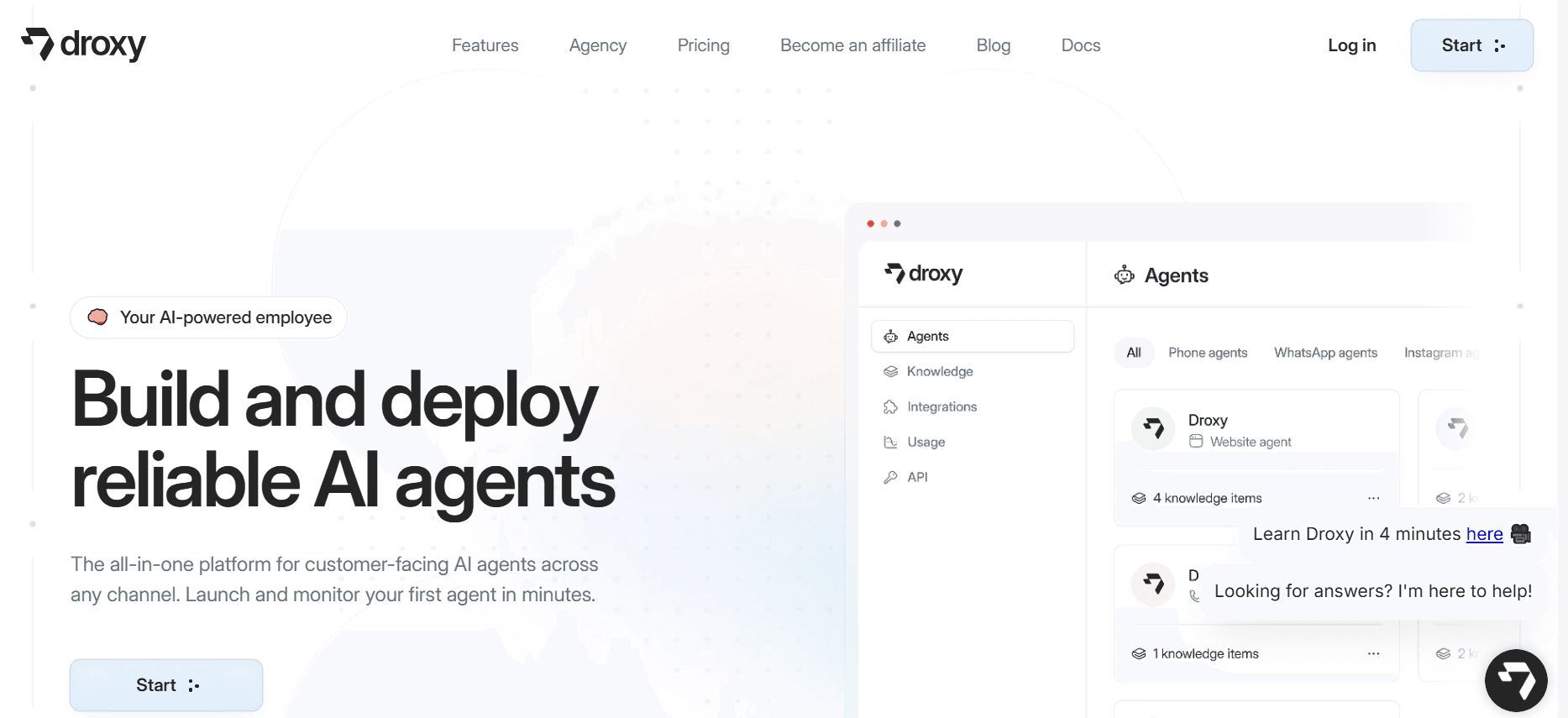
Droxy stands out as a comprehensive, no-code solution designed specifically for businesses to deploy intelligent AI agents that handle customer interactions across multiple channels. Positioned as "your AI-powered employee," it enables companies to create, launch, and manage customer-facing chatbots and agents quickly, often in minutes, by grounding them in company knowledge, brand voice, and specific goals. This makes it ideal for organizations looking to automate support, qualify leads, provide instant personalized responses, and scale engagement without technical expertise or high costs.
Key Features
No-code setup for rapid creation and deployment of custom AI agents in minutes, with no programming required.
Comprehensive knowledge integration from diverse sources, including websites, e-commerce stores, PDFs, YouTube videos, Google Drive, and more, with automatic syncing to maintain up-to-date information.
Multilingual capabilities support instant communication in over 95 languages with no additional configuration needed.
Cutting-edge AI powered by leading language models from OpenAI, Anthropic, Google, and Meta for natural, context-aware conversations.
Brand voice customization to ensure agents speak consistently in the company's unique tone and style.
Omnichannel deployment across any channel, such as websites, WhatsApp, Instagram, phone, Messenger, Discord, and more, with centralized communication management.
Real-time insights and analysis of customer interactions to track trends, growth, conversations, and optimize performance.
Automated lead collection, qualification, appointment booking, and handling of complex product/service inquiries.
Zapier and Droxy API support for seamless custom integrations and workflows with existing tools.
Human takeover/handoff options to escalate to live agents when necessary, while maintaining a natural flow.
Additional support for features like image messages, voice messages, voice call minutes, phone numbers, Shopify/e-commerce product recommendations, and Q&A.
Continuous adaptation and improvement based on ongoing interactions and monitoring.
Why Businesses Choose Droxy
Businesses opt for Droxy because it delivers tangible operational and revenue advantages in a straightforward, affordable package. It dramatically reduces time spent on repetitive customer questions (often cutting weekly hours from 10 to near zero), while slashing response times from minutes or days to instant replies and boosting call pickup rates to 100%. Companies appreciate the ability to automatically qualify leads, increase conversion rates (from around 10% to 25% in many cases), and scale support to handle millions of interactions at a fraction of the cost of human labor, starting as low as $20/month, compared to thousands in traditional staffing or licensing.
The platform's ease of use (no coding, quick setup, and effortless scaling), combined with 24/7 availability, consistent branded experiences, real-time optimization through analytics, and strong alignment with security and compliance, helps teams stay competitive as AI adoption grows. Trusted by over 30,000 businesses, Droxy empowers organizations to turn every customer touchpoint into revenue opportunities without straining resources.
2. Lindy
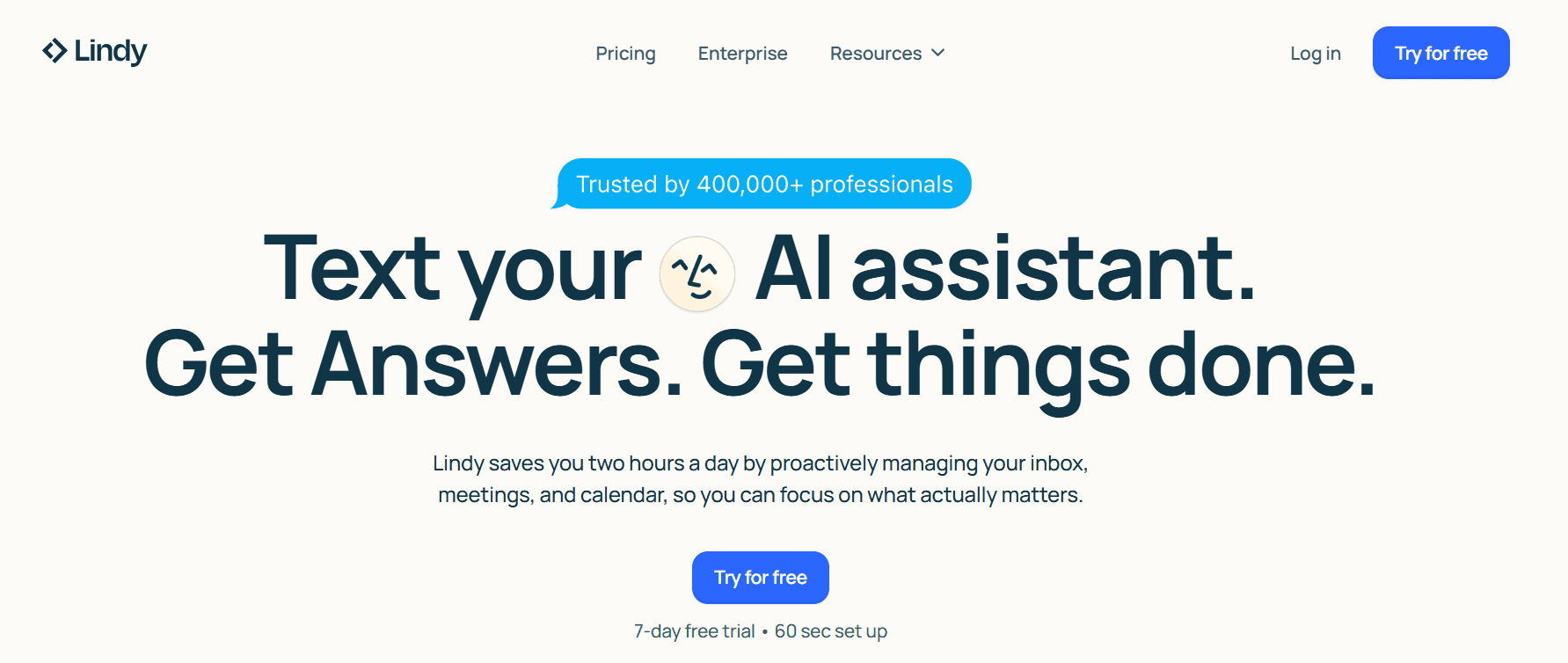
Lindy functions as a versatile AI agent platform that deploys customizable chatbots to websites, Slack, or other channels, enabling automated handling of inquiries by drawing from company documents, support history, and connected apps. It excels at turning repetitive business processes into efficient, hands-off operations for teams overwhelmed by routine tasks.
Key Features
No-code visual builder for quick agent creation with simple instructions.
Training on internal files, websites, help docs, or tools like Slack, Notion, Gmail, Salesforce, and HubSpot.
Support for multiple specialized agents running simultaneously, each with distinct roles like support, sales prep, or scheduling.
Shared context among agents for seamless background collaboration and task continuity.
Easy embedding on websites, Slack, or via public links, with smooth handoff to human agents when required.
Human-in-the-loop controls to pause and seek approval on sensitive actions.
Pre-built templates and educational resources for faster setup and ongoing improvement through learning from interactions.
3. ChatGPT
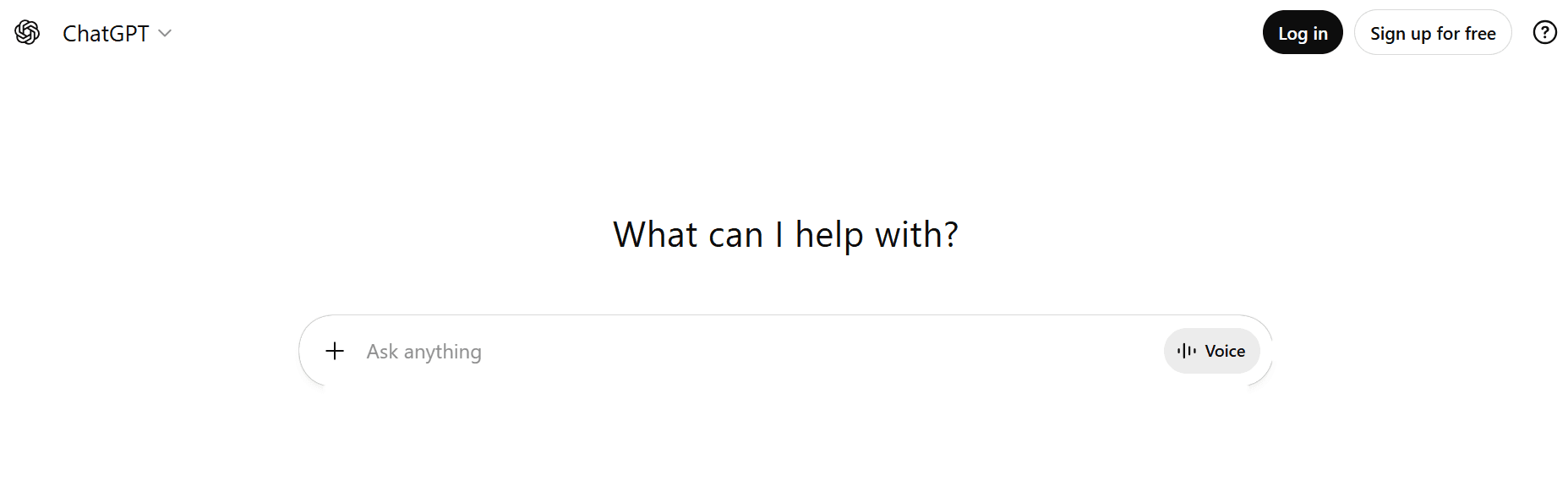
ChatGPT, developed by OpenAI, serves as a highly adaptable conversational platform that supports a broad array of professional activities, including content creation, programming, data interpretation, and process streamlining. It suits organizations across various functions that require a single, powerful AI solution that adapts to diverse departmental needs without extensive configuration.
Key Features
Access to cutting-edge models like advanced iterations for precise, high-quality outputs.
Integration with company storage systems such as Google Drive, SharePoint, GitHub, and Dropbox for context-aware responses with source references.
Multi-step task execution through agent-like capabilities that manage complex workflows from one instruction.
In-depth research functions that compile and organize information from numerous references into coherent summaries or reports.
Code generation, troubleshooting, and optimization by analyzing project repositories to accelerate development.
Strong enterprise security measures, including data non-use for training, encryption, and compliance with standards like SOC 2, HIPAA, and CCPA.
Administrative tools for access management, usage oversight, and dedicated support with service level agreements.
4. Claude
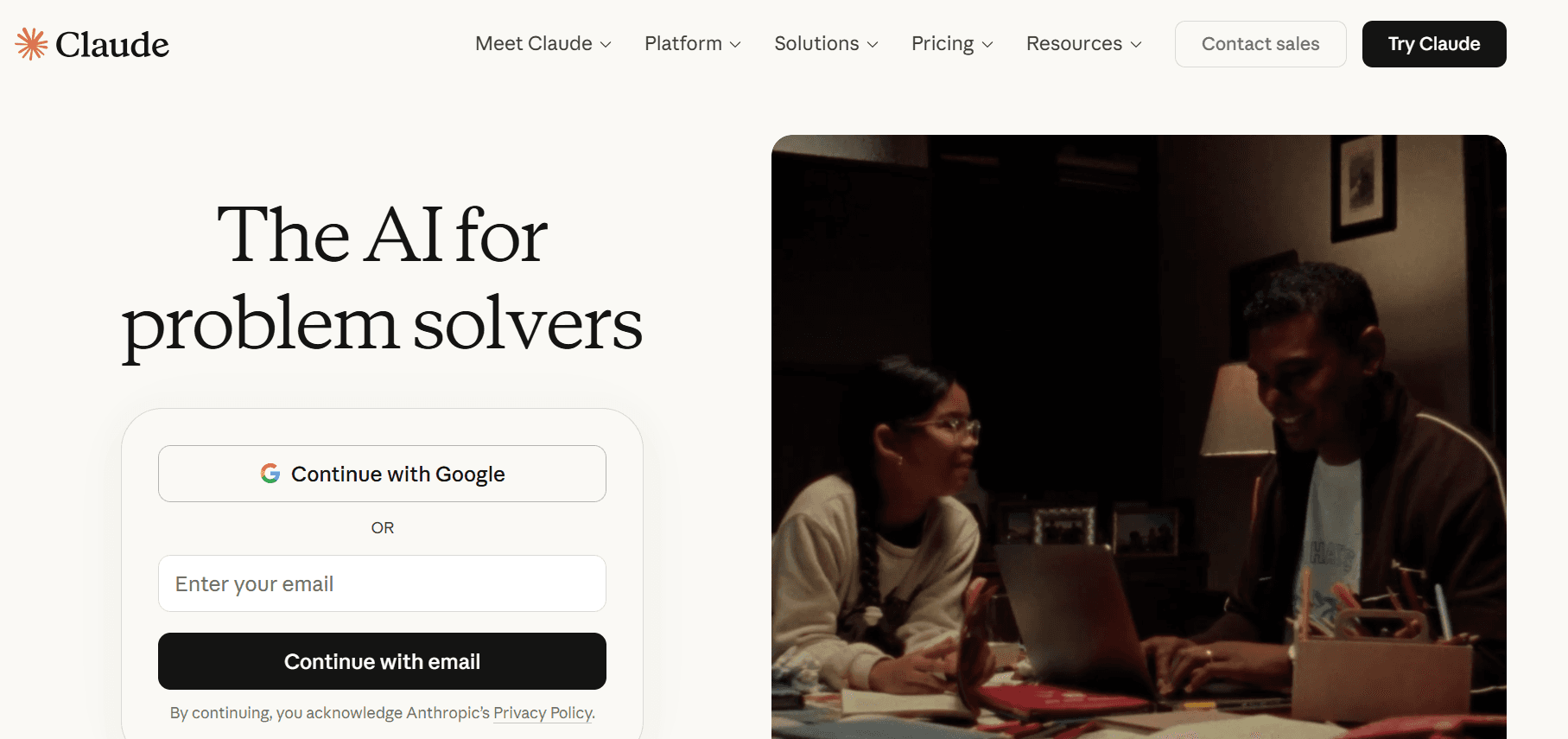
Claude, from Anthropic, stands out as an intelligent assistant optimized for thorough reasoning, extensive material review, and tackling intricate challenges in professional settings. It proves especially valuable for groups in engineering, product development, human resources, or marketing that regularly deal with voluminous files, technical details, or subtle communication.
Key Features
Persistent project spaces that maintain uploaded files, data sets, and instructions for ongoing context without repeated uploads.
Side-panel Artifacts for displaying editable code, visuals, documents, or interactive elements in a dedicated workspace.
Built-in code interpreter for executing Python scripts directly on provided data like CSVs, to uncover patterns or create charts.
An extended reasoning mode that breaks down complicated problems step by step, revealing thought processes for better verification.
Superior handling of long documents and nuanced text for tasks like proposal drafting, policy review, or messaging refinement.
Focus on safe, reliable outputs aligned with ethical guidelines, making it suitable for sensitive business applications.
Team and enterprise options with custom pricing tailored to organizational scale and requirements.
5. Google Gemini
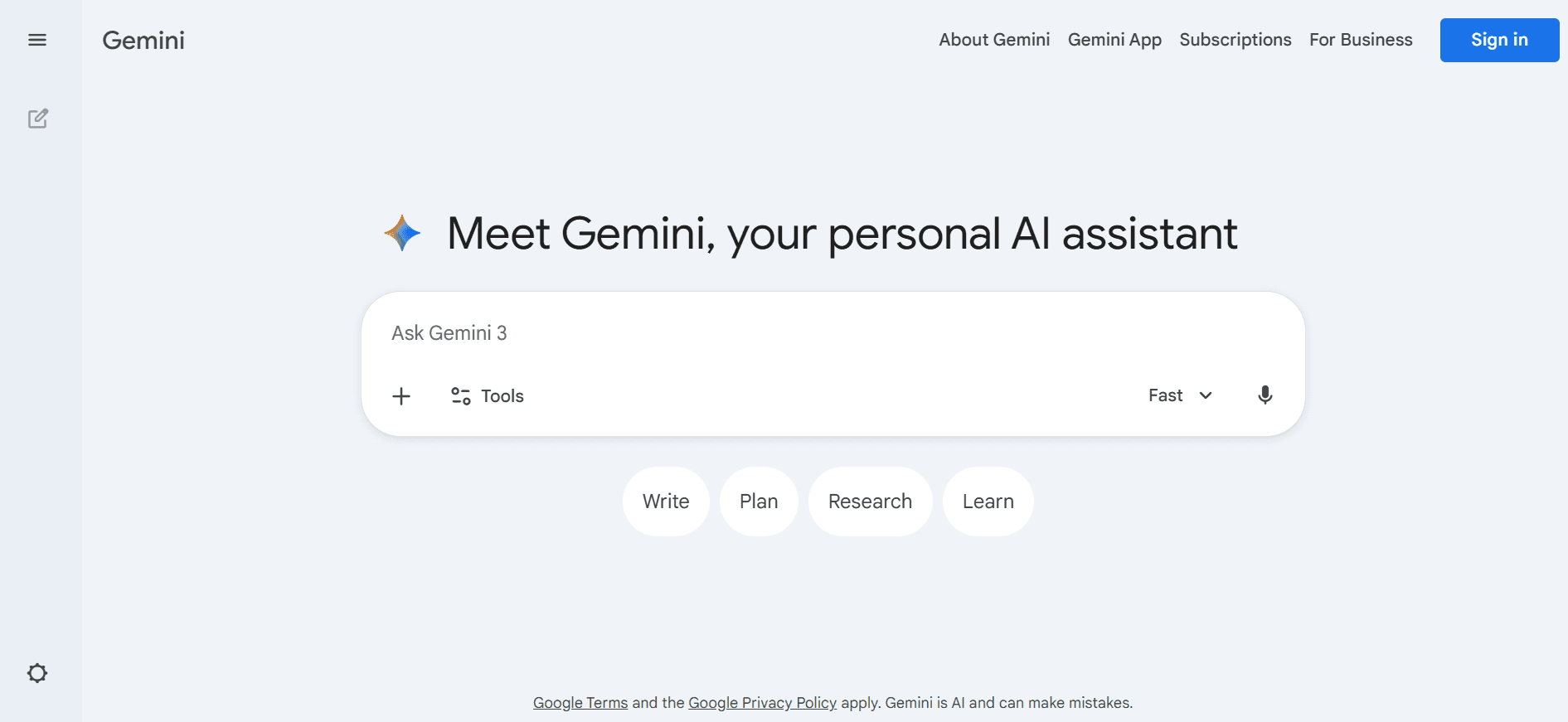
Gemini, Google's intelligent assistant, embeds directly into Gmail, Drive, Docs, Calendar, and Chrome, delivering assistance for research, file review, and messaging right where work happens. It fits teams deeply invested in Google Workspace who prefer AI support without app-switching or added complexity.
Key Features
Native operation within Gmail, Drive, Docs, and Calendar for tasks like locating emails, summarizing files, or drafting content.
On-page research in Chrome that extracts highlights, explains sections, or compares details from open web content.
Live conversational mode for dynamic brainstorming, strategy sessions, or idea exploration with real-time adaptation.
Multi-format file processing, including spreadsheets and reports, to generate insights without manual extraction.
Tone-adjusted email composition based on provided context, from informal notes to professional correspondence.
Admin-level controls to customize feature availability and permissions across the organization.
Inclusion in Google Workspace subscriptions, with enhanced access via add-on plans starting around $20/month.
6. Perplexity
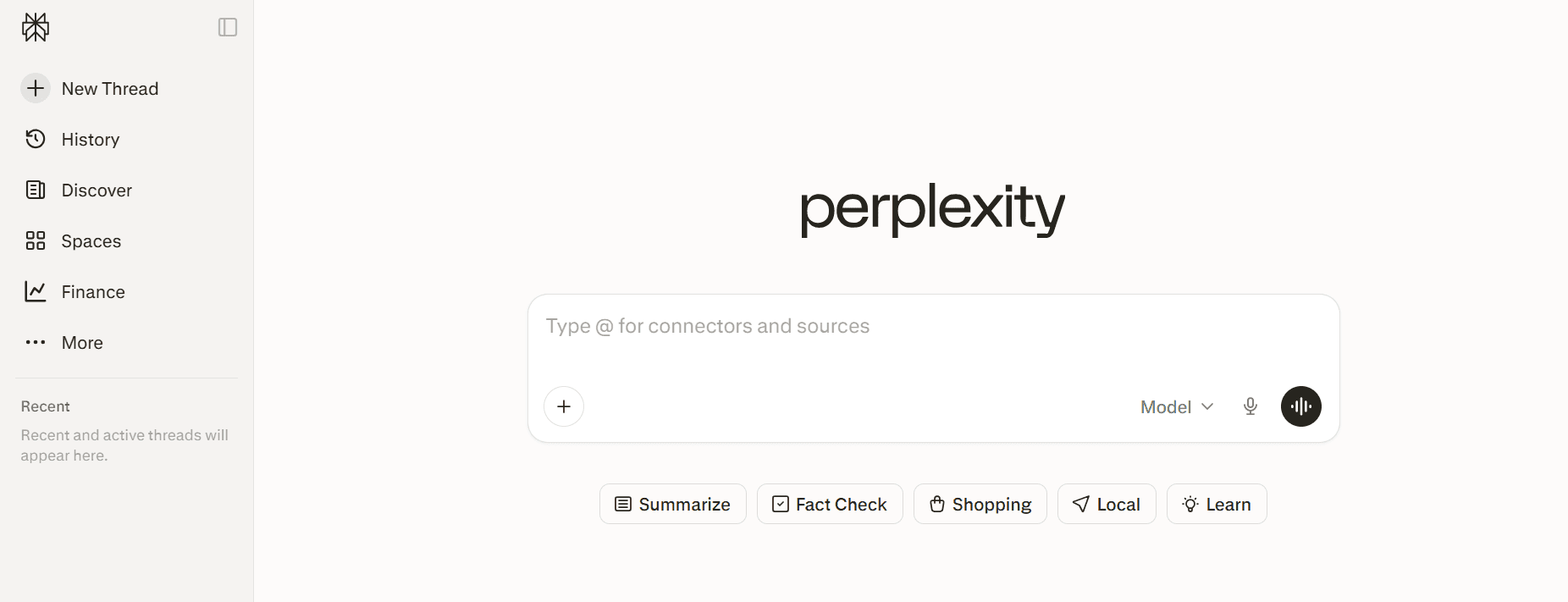
Perplexity operates as an AI-driven search engine that provides well-sourced, synthesized answers from real-time web data and internal resources. It targets sales, investment, research and development, or strategy teams needing quick, trustworthy intelligence with clear references.
Key Features
Cited, comprehensive responses that synthesize information rather than just listing links.
Specialized search modes like academic, financial, or social to target specific source types.
Advanced report generation for in-depth topics such as market evaluations or competitor reviews.
Support for uploading various files (PDFs, CSVs, images) to analyze contracts, data trends, or media.
Organized Spaces for project-based research with custom guidelines and team sharing.
Agentic browser capabilities to monitor sites, automate actions, or pull live data for workflows.
Pro and enterprise tiers starting around $20/month per user, with custom options for larger teams.
7. Intercom
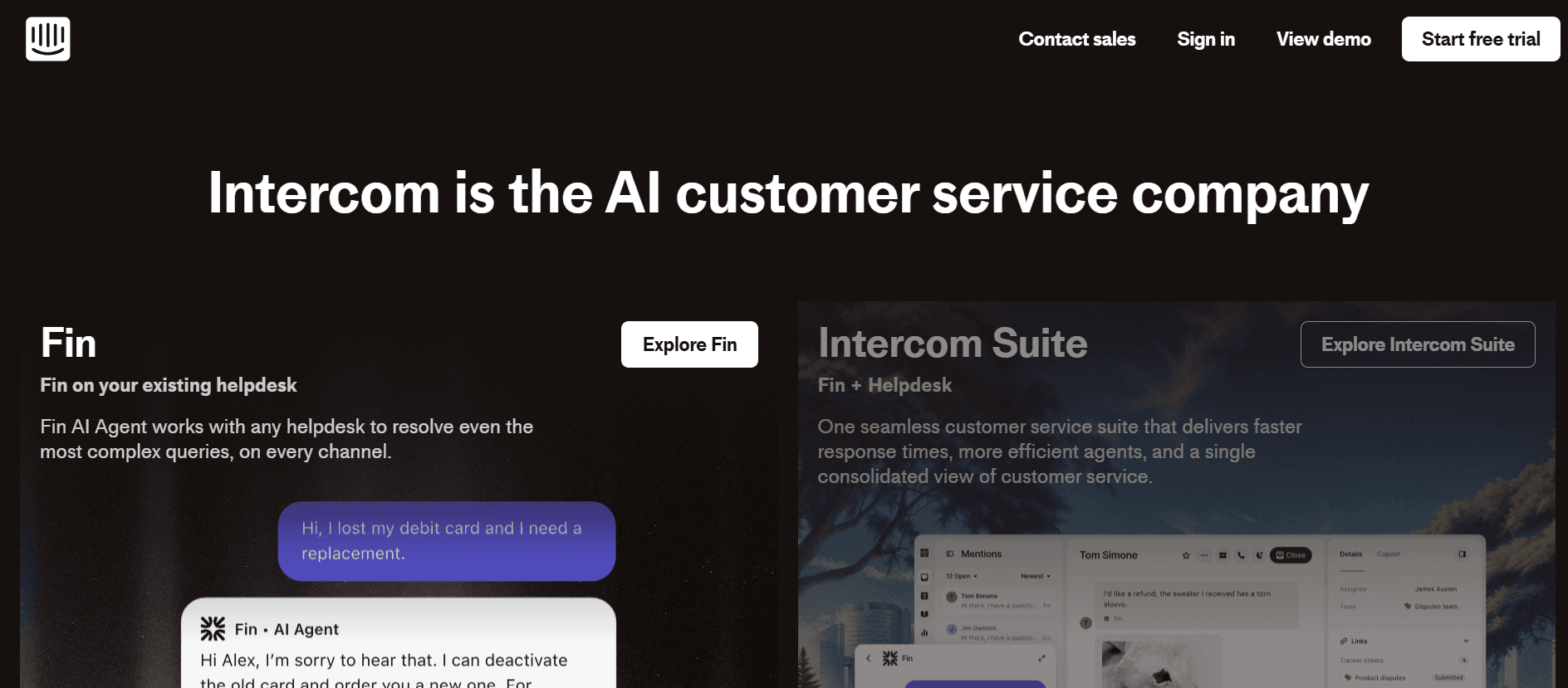
Intercom delivers a robust AI-enhanced customer service system featuring chatbots, automation, and support features to resolve inquiries efficiently. It benefits companies that handle substantial customer interaction volumes and seek to merge live chat, automated replies, and full-channel management.
Key Features
Rapid, accurate Fin AI Agent responses drawn from existing help resources with natural language handling.
High success rate on initial-tier queries, minimizing human transfers for routine issues.
AI Copilot assistance for agents, offering real-time suggestions, context, and question prompts.
Customizable messenger widget for branding consistency across web and mobile platforms.
Multi-channel support, including WhatsApp, Facebook, SMS, email, and more from one dashboard.
No-code Help Center creation, AI inbox management, and workflow automations.
Enterprise-oriented pricing starting at $39 per seat/month, with a no-card trial period.
8. Tidio
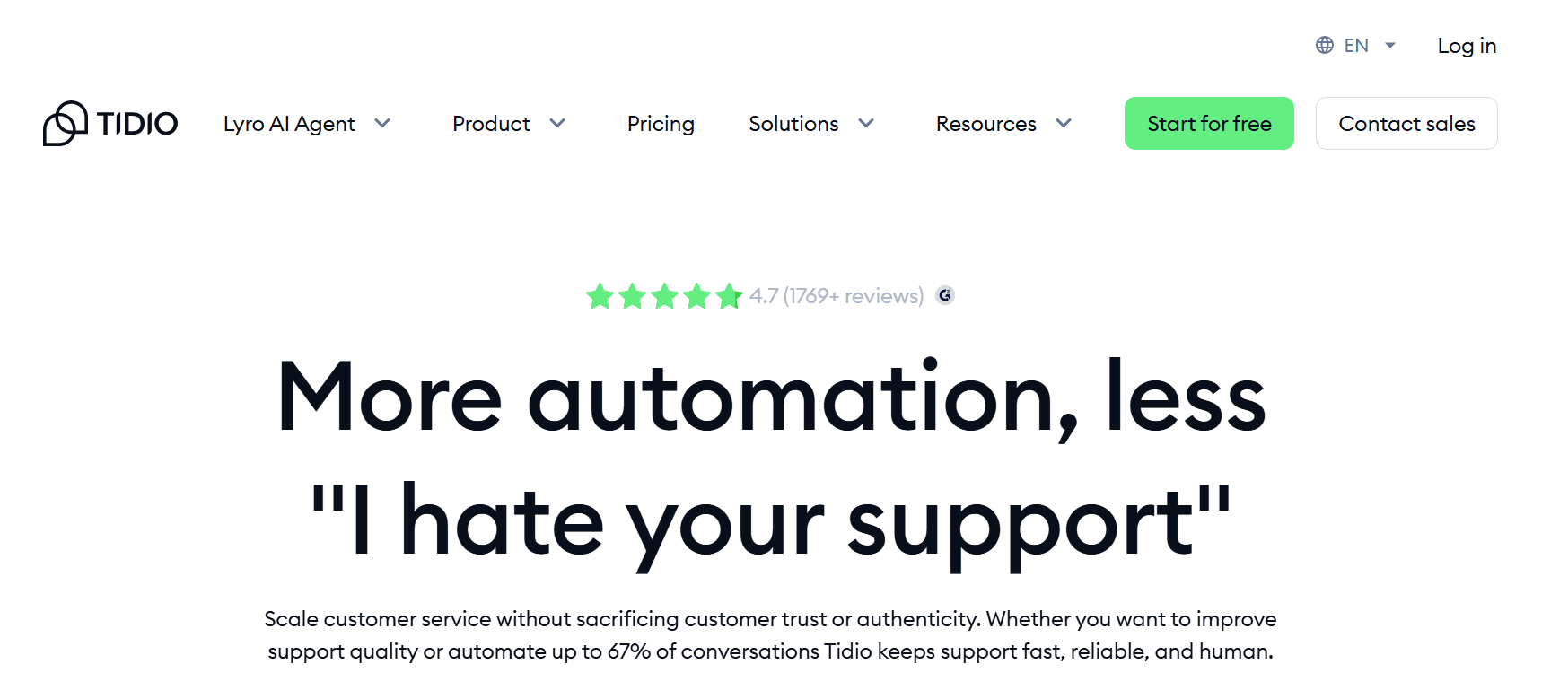
Tidio provides a unified platform combining live chat, AI-driven chatbots, and email tools to engage website visitors, resolve issues promptly, and support sales growth. It works particularly well for small to medium-sized online stores aiming to deliver real-time assistance while automating common requests to increase conversions and customer satisfaction.
Key Features
Intuitive dashboard consolidating inbox management, visitor monitoring, campaign setup, and chatbot configuration.
Lyro AI chatbot delivers natural, context-aware responses that adapt dynamically to customer inputs.
Pre-designed templates for quick deployment of bots focused on lead generation, sales support, or query resolution.
Seamless connections to systems like Zendesk, HubSpot, or Salesforce for unified conversation and data handling.
Automation Flows for straightforward, rule-based paths that handle routine actions such as status checks or bookings.
Simultaneous operation of scripted Flows and advanced Lyro AI to cover both structured and open-ended interactions.
Affordable entry with a free tier for core chat, and paid options beginning around $29/month, plus AI enhancements from $39/month.
9. Manychat
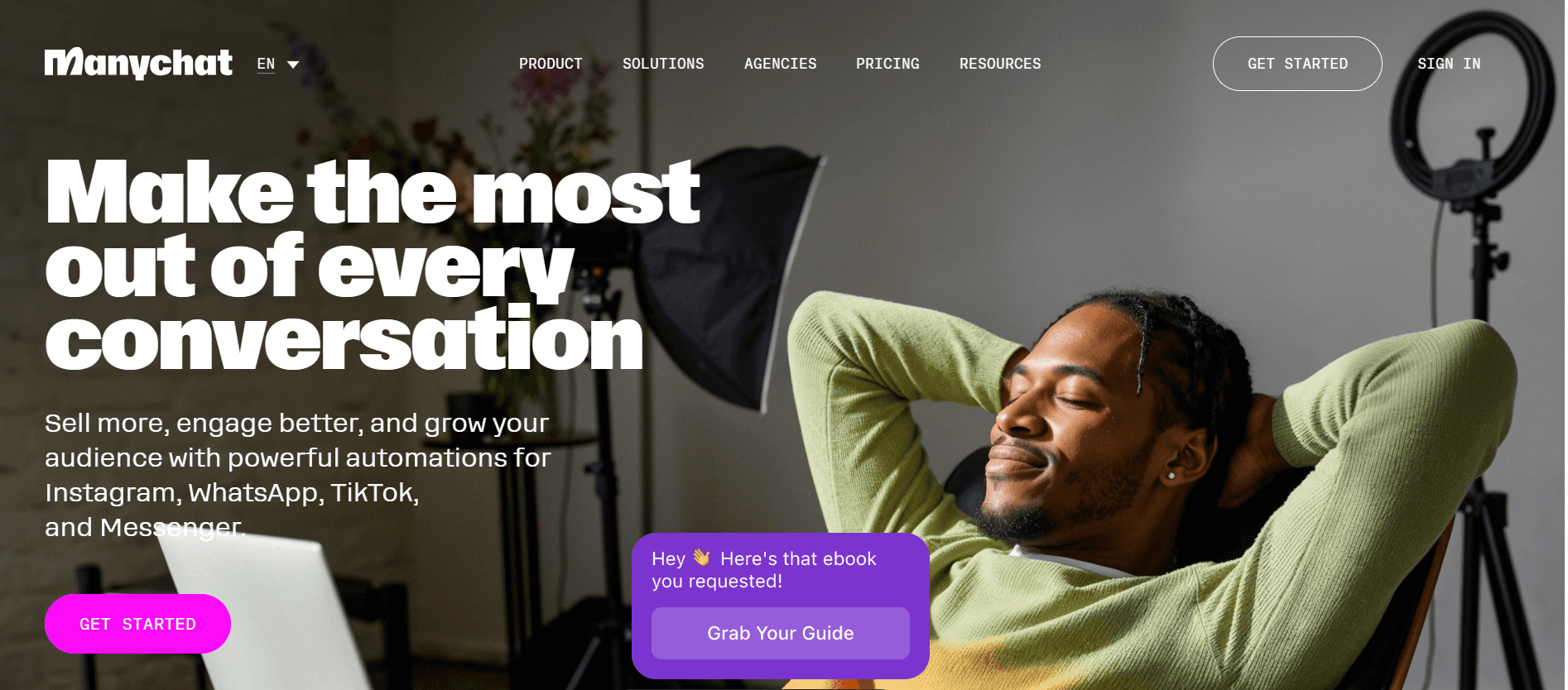
Manychat specializes in building automated messaging experiences across channels such as Instagram, Facebook Messenger, WhatsApp, and SMS to engage audiences, capture leads, and promote offerings. It suits brands and creators who rely on social platforms for direct customer outreach, promotions, and relationship-building.
Key Features
Rapid integration with major social messaging apps for instant automation setup.
AI-enhanced responses for more natural, adaptive interactions beyond rigid scripts.
Drag-and-drop Flow Builder with AI assistance to generate structures for tasks like appointments or lead collection.
Text refinement tools to polish messaging, align tone, and support multilingual campaigns.
Conversational data extraction for gathering details like contact info through natural dialogue.
Advanced intention detection that interprets query meaning rather than relying solely on keywords.
Free basic tier up to 1,000 contacts, with Pro starting at $15/month and AI add-on around $29/month.
10. Zendesk AI
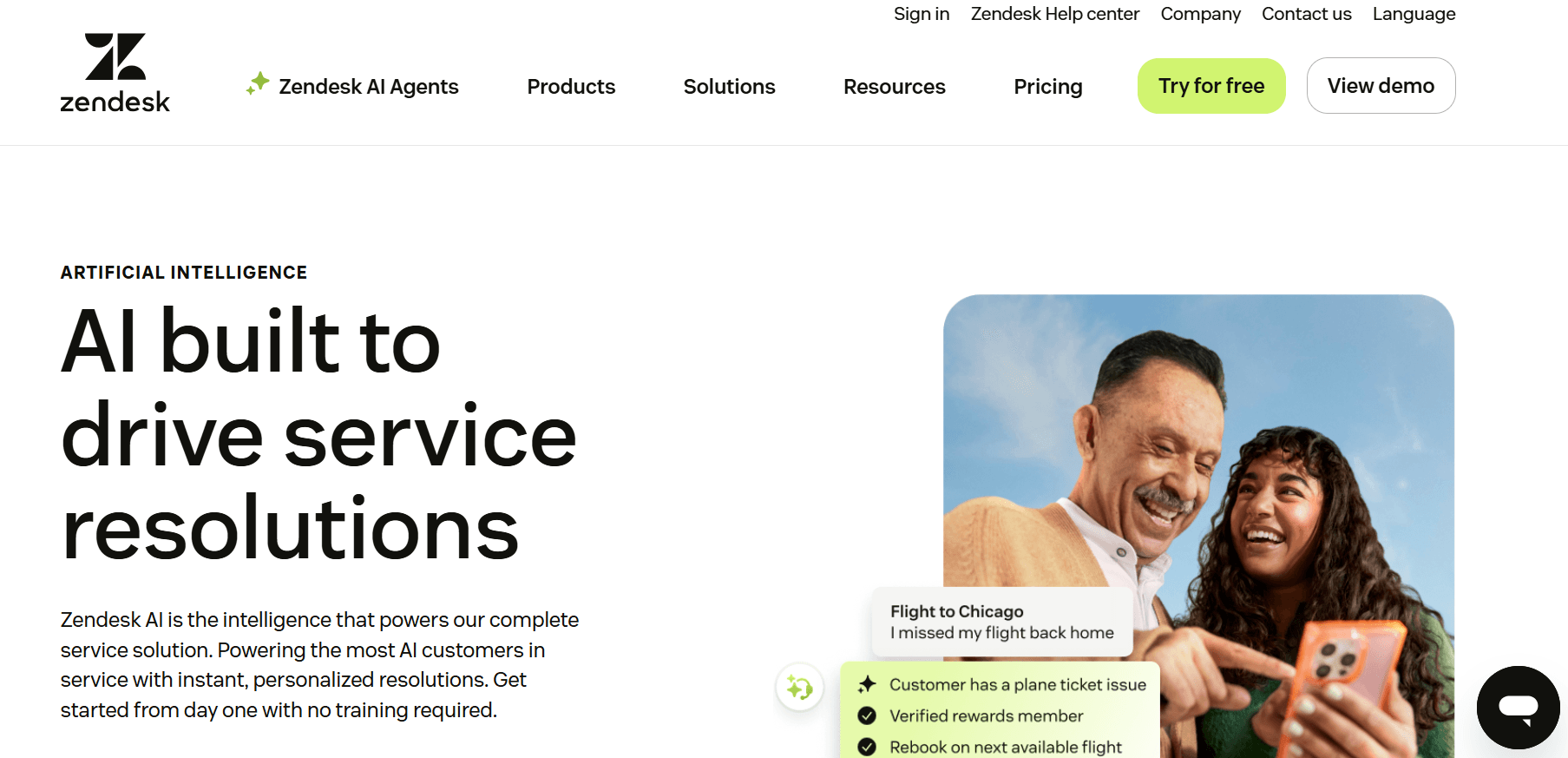
Zendesk offers an all-encompassing AI-powered customer service ecosystem that automates responses, supports agents, and manages interactions across multiple channels. It fits expanding organizations that require robust tools to blend automated processing with human oversight for high-volume support.
Key Features
Specialized generative AI agents trained on support scenarios for contextual, natural query resolution.
Multi-step conversational flows that maintain context and route appropriately.
Unified Agent Workspace combines chat, email, social, voice, and other channels.
Customizable self-service Help Center to deflect tickets through accessible knowledge resources.
No-code automation builder with triggers for faster initial replies and workflow efficiency.
Integrated voice capabilities for handling detailed or sensitive matters.
Detailed analytics dashboards tracking metrics like agent performance and trends, with plans starting around $19/agent/month and advanced AI in higher tiers.
11. Dialpad

Dialpad combines messaging, voice, video, and AI into a single cloud platform to streamline team collaboration and customer support. It excels for hybrid or remote teams that depend on phone and video interactions, offering intelligent enhancements throughout communications.
Key Features
Real-time call transcription, summaries, and actionable notes during meetings or support calls.
Live coaching and relevant suggestions are provided to agents mid-conversation.
Automated quality insights and analytics for monitoring response quality and team metrics.
AI-driven recaps that condense discussions into key highlights for quick follow-up.
Seamless switching across devices and channels without interruptions.
Support for sales tools like lead tracking and guided conversations.
Plans begin at $15/user/month for basics, with enhanced AI on Pro tiers around $25/user/month, and trials are available.
How to Choose the Right AI Chatbot for Your Business
Selecting the ideal AI chatbot for your business involves assessing your unique operational needs, including industry-specific requirements, integration with existing systems, and the level of automation required. By focusing on critical factors such as security, compatibility, regulatory compliance, team dynamics, personalization capabilities, and budgeting, you can identify a solution that boosts efficiency, enhances customer interactions, and supports long-term growth. This approach ensures the chatbot aligns seamlessly with your goals, avoiding common pitfalls like mismatched features or escalating costs.
Prioritize Security Above Additional Features
When handling sensitive information such as customer details, payment data, or medical records, it's crucial to select an AI chatbot that adheres to robust security protocols. This includes verifying data encryption methods, storage locations, and access controls to prevent breaches and maintain trust. Overlooking these can lead to significant risks, so evaluate platforms that demonstrate a commitment to protecting information throughout its lifecycle.
For example, Droxy emphasizes data security in its FAQs, ensuring that businesses can rely on safe handling of customer interactions. With its focus on secure knowledge integration from sources like websites and PDFs, Droxy helps maintain privacy while delivering accurate responses, making it a solid choice for companies prioritizing protection without unnecessary complexity.
Ensure Integrations Align with Your Existing Tools
The success of an AI chatbot often hinges on its ability to seamlessly integrate with your existing software ecosystem. Seek out options that offer native support for key platforms, such as customer relationship management systems, messaging apps, scheduling tools, and help desks. If custom setups are needed, API availability can enable tailored connections, reducing implementation time and enhancing overall workflow efficiency.
Droxy supports this through its Zapier integration and dedicated API, allowing businesses to build custom workflows and link with existing tools. This compatibility enables seamless integration into daily operations, such as automating lead collection and qualifying prospects, saving time and boosting adoption rates across teams.
Make Compliance a Non-Negotiable for Regulated Sectors
In fields like healthcare, banking, or law, where strict regulations apply, your AI chatbot must hold relevant certifications to avoid legal issues. This means confirming adherence to standards such as HIPAA for health data or other industry-specific requirements before finalizing your choice. Failing to do so can result in penalties, so thorough verification is essential for sustained operations.
While Droxy is particularly suited for general business applications where such certifications may not be mandatory, its secure handling of knowledge from diverse sources, combined with real-time insights, provides a reliable foundation for non-regulated industries, ensuring compliance with basic data protection needs without overcomplicating setups.
Account for Your Team's Size and Collaboration Requirements
The scale of your organization influences the chatbot features you'll need. Individual entrepreneurs might suffice with basic query handling, while mid-sized groups require shared resources and access controls. Larger enterprises often require advanced features such as single sign-on, detailed activity tracking, and priority support to effectively support multiple users.
Droxy caters to teams of all sizes with a simple setup that doesn't require technical expertise, making it accessible to solo users and small teams. For growing businesses, real-time analysis of interactions and a centralized communication platform facilitate collaboration, allowing teams to monitor trends and adapt strategies without complex permissions or logs.
Seek Strong Customization for Sustained Relevance
A chatbot's longevity depends on how well it can be adapted to your specific brand and processes. Look for platforms that support training on your unique voice, the creation of bespoke automations, and adjustments based on user behavior. Greater flexibility ensures the tool evolves with your business, delivering more personalized and effective engagements over time.
Droxy excels in this area by enabling users to ground the agent in business-specific knowledge and brand voice, customize personas, and define deployment goals. This level of control, supported by automatic syncing from sources like Google Drive or YouTube, enables tailored workflows that meet diverse needs, enhancing long-term value through consistent, personalized customer experiences.
Assess Costs Thoroughly to Avoid Surprises
Budgeting for an AI chatbot requires looking beyond initial prices, as limitations on free tiers, such as message limits or restricted features, can lead to unexpected expenses. Estimate your usage for interactions, support resolutions, and internal tasks, then compare variable pricing models against fixed rates to find the most economical fit.
Droxy offers straightforward pricing starting at $20 per month, which significantly reduces costs compared to traditional human labor or other platforms. By handling repetitive queries instantly and scaling to millions of customers, it minimizes licensing and time costs, making it an affordable option for businesses that calculate monthly volumes and seek predictable budgeting.
Create an AI Agent for Your Business within 5 Minutes
The implementation process no longer requires technical expertise or extended timelines. Modern platforms let you ground an AI agent with your business knowledge, configure its behavior, and deploy it across channels in minutes rather than months. What used to demand developer resources and complex integrations now happens through interfaces designed for business operators who need results immediately, not after a lengthy procurement and setup cycle.
Platforms like an AI agent for your business eliminate the traditional barriers by handling the technical complexity behind a simple setup flow. You upload your knowledge sources (websites, PDFs, product catalogs, support documentation), define your brand voice and goals, and then deploy to any channel (website, WhatsApp, phone, Instagram) without writing code or manually configuring APIs. The system automatically syncs updates, supports 95+ languages instantly, and starts handling inquiries the moment you activate it. The setup that previously consumed weeks now completes before your next meeting ends.
The speed matters because delayed implementation means continued revenue loss. Every day without instant response capability is another day of missed opportunities, frustrated customers choosing competitors, and support teams drowning in repetitive questions. Fast deployment turns intention into action, converting the decision to adopt AI into actual business impact before momentum fades or priorities shift.
Related Reading
Your customers expect instant answers at 3 AM, personalized recommendations that feel human, and conversations that solve problems without endless waiting. The right AI chatbot can transform these expectations into reality, but finding the best chatbot development platform that actually delivers on these promises requires cutting through endless marketing claims and feature lists. This guide will help you select and implement the perfect AI chatbot to automate customer service, boost sales, and scale your business effortlessly in 2026.
What if you could build a sophisticated AI agent without writing code or managing complex integrations? Droxy offers an AI agent for your business that turns your existing content into an intelligent conversational assistant, helping you achieve exactly what you need: automated customer support that feels personal, sales conversations that convert, and a system that grows with your business. The platform handles the technical complexity while you focus on what matters: connecting with customers and driving results.
Table of Contents
Summary
Modern AI chatbots resolve customer issues at a 70% success rate compared to just 30% for traditional rule-based systems, according to Gartner. This performance gap translates directly into fewer escalations, shorter wait times, and lower support costs, while also reducing the likelihood that frustrated customers abandon interactions entirely.
Customer service costs drop by up to 30% when businesses implement AI chatbots instead of relying solely on traditional support methods, IBM research shows. The savings come from higher resolution rates, reduced escalations, and the ability to handle more complex inquiries without human intervention, with efficiency gains often offsetting higher initial implementation costs over time.
AI chatbots handle up to 80% of routine customer service questions without human involvement, according to IBM. This triage happens seamlessly, allowing support teams to focus on high-impact interactions that require expertise or empathy while simple inquiries resolve instantly, transforming productivity by eliminating the need to cycle through dozens of basic questions to find the few that need real attention.
Immediate response capability has become a competitive requirement, with 64% of consumers identifying 24-hour service as the best feature of chatbots according to Tidio. Speed now functions as a proxy for competence, and businesses that can't respond in real time risk losing opportunities before they even know a customer was interested, as delayed responses signal indifference rather than legitimate unavailability.
Every customer conversation generates data about recurring questions, confusing processes, and friction points, but traditional support captures these insights slowly through scattered ticket systems and agent notes. AI chatbots log every exchange, categorize inquiries automatically, and surface trends in real time, turning customer interactions into a continuous feedback loop that reveals which questions shouldn't need asking in the first place.
An AI agent for your business addresses this by handling customer communications across all channels in real time, converting leads that would otherwise disappear due to delayed responses or limited availability.
What is an AI Chatbot, and How Does It Work?
An AI chatbot is software that simulates conversation through text or voice, using artificial intelligence to interpret questions, understand context, and generate responses that feel natural. Unlike older systems that relied on rigid scripts, these tools process language dynamically, learning from interactions to improve accuracy over time. They operate across websites, messaging apps, and phone lines, handling everything from simple FAQs to complex customer inquiries without requiring a human on the other end.
The distinction matters because modern chatbots don't just match keywords to canned replies. They analyze intent, extract meaning from messy input, and adapt their tone based on the situation. This capability transforms them from basic responders into systems that can actually hold a conversation, remember what was said earlier, and adjust based on the user's next need. That shift from mechanical to conversational is what makes them valuable for businesses trying to meet customer expectations in real time.
How AI Chatbots Evolved From Scripts to Strategy
Early chatbots from the 1960s operated like decision trees, matching user inputs to predefined branches and spitting out rehearsed answers. They worked fine for narrow tasks, like checking account balances or confirming store hours, but collapsed the moment someone asked a question outside the script. A single typo or an unexpected phrasing would derail the entire exchange, leaving users frustrated and forcing them to contact human support.
The breakthrough came when machine learning entered the picture. Instead of programming every possible response, developers trained models on massive datasets of real conversations, teaching systems to recognize patterns and generate original replies. This approach enabled chatbots to handle ambiguity, interpret slang, and even detect emotional cues such as frustration and urgency. The result is a tool that doesn't just answer questions but understands what's being asked, even when the phrasing is imperfect.
Today's systems combine multiple technologies to create seamless interactions. Natural language processing breaks down sentences into components, identifying what the user wants and what information matters. Machine learning refines predictions based on historical data, while generative AI produces responses that sound human rather than robotic. Together, these layers create a chatbot that feels less like a vending machine and more like a knowledgeable assistant who's paying attention.
The Technologies That Make Conversations Work
Natural language processing sits at the core, enabling chatbots to parse grammar, extract intent, and identify key details from user input. It's the difference between a system that recognizes "I need help with my order" and one that understands "My package still hasn't arrived and I'm leaving town tomorrow." The first is a category; the second is a problem with urgency attached. Processing that nuance requires algorithms that go beyond word matching to grasp context and priority.
Machine learning adds adaptability. Each interaction feeds data back into the system, refining how it interprets similar questions in the future. If a chatbot misunderstands a query about refunds, the correction trains it to handle that phrasing better next time. This feedback loop means performance improves without manual reprogramming, turning every conversation into a learning opportunity that compounds over time.
Generative AI, including large language models, brings creativity to the mix. Instead of pulling from a library of pre-written responses, these systems compose answers on the fly, drawing from learned patterns to produce replies that fit the specific situation. This capability allows chatbots to handle open-ended questions, explain complex topics, and even adjust tone based on the user's mood. The result is a conversation that feels fluid rather than formulaic, keeping users engaged rather than prompting them to search for the "speak to a human" button.
How an AI Chatbot Processes a Conversation
The process starts when a user sends a message through a chat interface, whether on a website, app, or messaging platform. The system tokenizes the input, breaking it into manageable units like words or phrases, then runs it through understanding mechanisms to classify intent and extract relevant entities. If someone types "Can I return this jacket?" the chatbot identifies "return" as the intent and "jacket" as the subject, then cross-references order history to provide a specific answer rather than a generic policy statement.
Next comes response generation. The chatbot pulls from its knowledge base, which might include product catalogs, support documentation, or past interactions, to craft a reply that addresses the user's question. Generative tools shape the language so it sounds conversational rather than mechanical, adjusting tone based on context. If the user seems frustrated, the response might include an apology or an offer to escalate the issue. If they're just browsing, the tone stays informative without feeling pushy.
The cycle closes with delivery and learning. The chatbot sends the response, monitors whether the user follows up or exits, and logs the interaction for future reference. If the conversation ends successfully, the system reinforces the approach it took. If the user asks for clarification or requests a human, that signals a gap worth addressing. Over time, these iterations refine the chatbot's ability to handle increasingly complex interactions while maintaining conversation flow, turning raw interactions into structured intelligence.
Why Immediate Responses Have Become Non-Negotiable
Customer expectations have shifted faster than most businesses realize. 64% of consumers say 24-hour service is the best feature of chatbots, reflecting a fundamental change in how people evaluate service quality. Waiting hours for an email reply or days for a callback no longer feels acceptable when competitors answer questions instantly. Speed has become a proxy for competence, and businesses that can't respond in real time risk losing opportunities before they even know a customer was interested.
The gap between expectations and reality results in tangible revenue loss. When a potential customer asks about pricing or availability and receives no immediate answer, they move on. The assumption isn't that you're busy; it's that you don't care or can't deliver. This perception compounds across every missed interaction, turning slow response times into a competitive disadvantage that's hard to recover from once customers have found alternatives.
Platforms like an AI agent for your business address this by handling customer communications across all channels in real time, ensuring no inquiry goes unanswered, regardless of when it arrives. The system manages website chat, messaging apps, phone calls, and social media comments simultaneously, converting leads that would otherwise slip through the cracks due to limited availability or resource constraints. This approach doesn't just improve response times; it fundamentally changes how businesses capture and convert interest before it evaporates.
Where Rule-Based Systems Still Show Up
Some chatbots still operate on fixed logic, responding to specific keywords or commands with predetermined outputs. These rule-based systems excel in controlled environments where predictability matters more than flexibility, like routing support tickets to the right department or confirming appointment times. They're fast, reliable, and easy to audit because every response follows a documented path. The tradeoff is rigidity. Ask a question slightly differently than expected, and the system either guesses wrong or admits it doesn't understand.
Hybrid models combine rule-based structure with AI adaptability, using scripts for routine tasks and machine learning for complex queries. This approach balances efficiency with intelligence, letting businesses automate repetitive interactions without sacrificing the ability to handle nuanced conversations. The system knows when to follow a script and when to improvise, reducing friction for users who just want a quick answer while still supporting those with more complicated needs.
The choice between rule-based and conversational AI isn't about one being better; it's about matching the tool to the task. If your customers ask the same ten questions repeatedly, a rule-based system might suffice. If inquiries vary widely and context matters, AI becomes necessary. Most businesses land somewhere in between, needing both structure for common scenarios and flexibility for everything else.
But understanding the mechanics is only half the picture; knowing when each approach actually works changes how you think about implementation.
AI Chatbots vs. Traditional Chatbots
Traditional chatbots follow scripts and keyword triggers, handling only what they've been explicitly programmed to recognize. AI chatbots process language dynamically, interpreting intent and context to generate responses that adapt to each conversation. The gap between these approaches determines whether your customer interactions feel helpful or mechanical, which directly affects whether people stay engaged or abandon the conversation entirely.
Response Flexibility and Conversation Flow
Rule-based systems work like telephone menus. Press one for sales, two for support, three for everything else. They match user inputs to predefined paths, delivering answers only when the phrasing aligns with programmed triggers. Type "refund policy," and you get the policy. Type "I need my money back because this product broke," and the system might not recognize the request at all, forcing you to rephrase or start over. That friction compounds quickly when customers need help, not a guessing game.
AI-powered systems interpret what you mean, not just what you type. They parse sentence structure, extract intent, and maintain context across multiple exchanges. If someone asks about returns, then mentions a specific order number three messages later, the AI connects those details without requiring the user to repeat themselves. This continuity mirrors how humans actually communicate, reducing the cognitive load on customers who just want their problem solved.
The difference becomes most apparent when conversations deviate from expected patterns. Traditional chatbots break. AI chatbots adapt by using learned patterns to handle variations in phrasing, slang, and incomplete information. That adaptability keeps conversations moving forward instead of stalling on technicalities, which matters when speed determines whether someone completes a purchase or closes the tab.
Learning Capability and Long-Term Performance
Traditional chatbots remain static unless developers manually update them. Every new product launch, policy change, or common customer question requires someone to write new rules, test paths, and deploy updates. That maintenance burden grows with business complexity, turning what seemed like a simple automation into an ongoing development project that consumes resources without improving on its own.
AI systems learn from interactions. Each conversation feeds data back into the model, refining how it interprets similar questions in the future. If customers frequently ask about shipping times using phrases the system initially struggled with, it adjusts its understanding of those phrases. This self-improvement reduces the need for constant manual tuning, allowing the chatbot to handle emerging topics or shifting customer behaviors without waiting for a developer to intervene.
The compounding effect of this learning widens the performance gap over time. A rule-based chatbot on day one performs identically to that same chatbot six months later. An AI chatbot improves with volume, becoming more accurate and contextually aware as it processes more conversations. That trajectory matters when you're trying to scale support without increasing headcount in proportion.
Handling Ambiguity and Complex Requests
Traditional chatbots excel at straightforward, high-volume tasks with predictable inputs. Checking order status, confirming business hours, or directing users to the right department all work well when the questions follow expected formats. But introduce ambiguity (like "My package seems lost" or "I got charged twice but only received one item") and these systems struggle, often defaulting to generic responses or immediately escalating to human agents.
AI chatbots manage nuance by analyzing intent deeply and cross-referencing multiple data sources in real time. They draw on knowledge bases, order histories, and support documentation to craft tailored answers to specific situations. If someone describes a problem without using exact product names or error codes, the system infers what they're referring to from context clues and provides relevant solutions rather than asking the user to clarify every detail first.
According to Gartner, traditional rule-based chatbots have a 30% success rate in resolving customer issues compared to 70% for AI-powered chatbots. That gap translates directly into customer satisfaction and operational efficiency. Lower resolution rates mean more escalations, longer wait times, and higher support costs, while also increasing the likelihood that frustrated customers abandon the interaction entirely.
Natural Language Understanding and Personalization
Rule-based systems force users into structured flows, presenting buttons or multiple-choice options that constrain how people can ask questions. This approach works for simple navigation, but it feels restrictive when someone has a unique problem that doesn't fit neatly into predefined categories. The conversation becomes a series of forced choices rather than a natural exchange, creating friction and signaling to the user that the system isn't really listening.
AI chatbots process natural language without requiring users to conform to rigid formats. People can type full sentences, ask follow-up questions, or change topics mid-conversation, and the system adjusts accordingly. This flexibility mirrors how customers interact with human support agents, making the experience feel less like troubleshooting a machine and more like getting help from someone who understands the problem.
Personalization deepens this effect. AI systems remember previous interactions, preferences, and account details, using that context to tailor responses. If a returning customer asks about an order, the chatbot can reference their purchase history without making them provide order numbers or repeat information they've already shared. That continuity builds trust and reduces the effort required to get help, which directly affects whether people choose to engage with the chatbot or request a human immediately.
Cost Structure and Implementation Realities
Traditional chatbots typically require lower upfront investment. Building decision trees and scripting responses takes time, but doesn't demand advanced infrastructure or specialized expertise. For businesses with limited budgets or very specific, narrow use cases, this simplicity can make sense. The system does exactly what it's told, nothing more, which provides predictability even if it sacrifices capability.
AI chatbots demand greater initial resources for training, integration, and fine-tuning. You're not just writing scripts; you're feeding the system data, testing its understanding, and refining its responses until it performs reliably across diverse scenarios. That setup phase takes longer and costs more, which can feel like a barrier for organizations accustomed to faster, cheaper automation tools.
The ROI calculation shifts when you factor in long-term performance. AI chatbots reduce customer service costs by up to 30% compared to traditional support methods. Those savings come from higher resolution rates, fewer escalations, and the ability to handle more complex inquiries without human intervention. Over time, the efficiency gains and reduced need for manual updates often offset the higher starting costs, delivering better value as interaction volume grows.
Most businesses miss revenue not because they lack technology, but because they can't respond fast enough when interest peaks. Platforms like an AI agent for your business handle customer communications across all channels in real time, including website chat, messaging apps, phone calls, and social media comments. This approach converts leads that would otherwise disappear due to delayed responses or limited availability, turning speed into a competitive advantage rather than a constant operational challenge.
When Each Approach Actually Works
Rule-based chatbots still make sense for controlled environments where predictability trumps flexibility. Routing support tickets, confirming appointments, or answering a fixed set of FAQs all benefit from systems that follow documented paths without deviation. The simplicity reduces risk and makes auditing straightforward, which matters in regulated industries or scenarios where consistency is non-negotiable.
AI chatbots become necessary when inquiries vary widely, context matters, and customer expectations demand more than canned responses. E-commerce, financial services, healthcare, and any business that handles nuanced customer interactions benefit from systems that can interpret intent, retain context, and generate tailored responses. The investment pays off when the alternative is either hiring more support staff or accepting that a significant portion of customer inquiries won't be resolved satisfactorily.
Hybrid models combine both approaches, using rule-based logic for routine tasks and AI for everything else. This structure balances efficiency with intelligence, automating repetitive interactions without sacrificing the ability to handle complex conversations. The system knows when to follow a script and when to improvise, reducing friction for users who just want a quick answer while still supporting those with more complicated needs.
But knowing the differences only matters if you understand why businesses are adopting these systems in the first place.
Related Reading
Why Do Businesses Need AI Chatbots?
Businesses adopt AI chatbots because delayed responses directly cost revenue, and traditional support models can't scale to meet the expectation for instant, personalized interaction across every channel. When a potential customer asks about pricing at 11 PM, or a client needs help during a product launch spike, the business that answers immediately wins. The one who waits until morning loses the opportunity before they even know it existed.
This isn't about convenience anymore. It's about survival in markets where competitors provide 24/7 engagement, and customers interpret silence as indifference. The gap between what people expect and what most businesses deliver creates a revenue leak that compounds with every unanswered inquiry, abandoned cart, or frustrated user who moves on without waiting.
Scaling Support Without Scaling Headcount
Customer inquiry volume doesn't grow linearly. A product launch, seasonal spike, or viral social mention can triple support demand overnight. Traditional teams handle this by hiring more agents, extending shifts, or accepting that response times will stretch from minutes to hours or days. Each approach either bloats costs, burns out staff, or sacrifices the speed that keeps customers engaged.
AI systems absorb volume surges without additional resources. They handle hundreds of simultaneous conversations, pulling accurate answers from knowledge bases and routing complex cases to humans only when necessary. This means a team of five can support the inquiry load that previously required fifteen, not by working harder but by letting automation handle repetitive questions while humans focus on nuanced problems that actually need judgment.
The operational math shifts dramatically. Businesses can reduce customer service costs by up to 30% by implementing chatbots, according to IBM, because resolution happens faster, escalations drop, and the same team capacity suddenly covers far more ground. That efficiency doesn't just cut expenses. It frees budget and attention for improvements that manual support models never had bandwidth to pursue.
Capturing Revenue During Off-Hours
Most businesses operate during standard hours, but customer interest doesn't respect schedules. Someone researching software at midnight, comparing products on Sunday morning, or needing help during a holiday represents real revenue potential. If they can't get answers immediately, they find a competitor who can. The assumption isn't that you're closed. It's that you're not serious about their business.
This dynamic hits hardest in competitive markets, where alternatives are just a search away. E-commerce, SaaS, professional services, and any business relying on inbound leads all face the same challenge: interest peaks unpredictably, and the window to convert it closes fast. Waiting until the next business day to respond means the prospect has already moved on, signed with someone else, or lost the urgency that prompted their initial inquiry.
Platforms like an AI agent for your business continuously handle customer communications across all channels, managing website chat, messaging apps, phone calls, and social media comments without gaps. This approach converts leads that would otherwise disappear due to limited availability, turning every hour into productive selling time rather than accepting that nights and weekends represent lost opportunities.
Maintaining Consistency Across Channels
Customers don't think in terms of support channels. They ask questions wherever it's convenient (website chat, Instagram DM, email, phone) and expect the same quality regardless of medium. Traditional teams struggle with this because different channels often route to different people, each with varying knowledge levels, response styles, and access to customer history. The result is fragmented experiences where someone gets a detailed answer via email but a generic brush-off on social media.
AI chatbots unify responses by drawing from a single knowledge source, ensuring that the answer to "What's your return policy?" remains consistent whether asked on Facebook, your website, or through SMS. This eliminates the frustration of receiving conflicting information and the operational waste of maintaining separate support processes for each platform. One system, one source of truth, uniform quality everywhere.
The consistency extends beyond content to tone and timing. Customers receive the same level of attention at 3 AM as at 3 PM, and interaction quality doesn't degrade based on which agent picks up the conversation. This reliability builds trust faster than any marketing claim because it proves the business actually delivers on its promises every single time.
Reducing Human Bottlenecks in Qualification
Sales and support teams spend significant time answering questions that don't require human judgment: checking order status, confirming product specifications, explaining basic policies, or verifying eligibility. These interactions consume hours that could go toward closing deals or solving complex problems, but they can't be ignored because each represents a potential customer who needs attention.
Chatbots can handle up to 80% of routine customer service questions, according to IBM, meaning the majority of inquiries never require human involvement. AI systems answer instantly, pull relevant details from databases, and escalate only when the situation demands expertise or empathy that automation can't provide. This triage happens seamlessly, so customers get immediate help for simple needs while humans focus on conversations where they actually add value.
The shift transforms team productivity. Instead of cycling through fifty basic inquiries to find the five that need real attention, agents spend their time on high-impact interactions. Response quality improves because they're not rushing through repetitive questions to clear the queue. Customer satisfaction rises because simple problems resolve instantly, and complex ones receive focused, thoughtful support rather than divided attention.
Collecting Insights That Improve Operations
Every conversation generates data about what customers ask, how they phrase problems, which products confuse them, and where processes create friction. Traditional support captures some of this through ticket systems, but the insights remain scattered across agents' notes, email threads, and unstructured feedback. Patterns emerge slowly, if at all, because nobody has time to analyze thousands of interactions for recurring themes.
AI chatbots log every exchange, categorize inquiries automatically, and surface trends in real time. If fifty people ask the same question about shipping costs in a week, the system flags it as a knowledge gap worth addressing. If a specific product page causes confusion, the pattern becomes apparent immediately rather than weeks later, when someone finally reviews support metrics. This visibility turns customer interactions into a continuous feedback loop that drives improvements.
The operational value compounds over time. Businesses identify which FAQs actually matter, which policies need clearer communication, and which features cause the most friction. That intelligence informs everything from website copy to product development, creating a cycle in which better information reduces support load, freeing capacity to implement more improvements. The chatbot doesn't just answer questions. It reveals what questions shouldn't need asking in the first place.
But understanding why businesses adopt these systems matters only if you know how to implement one without the process consuming months of development time.
Related Reading
11 Best AI Chat Bots For Your Business in 2026
In 2026, AI chatbots have become essential tools for businesses seeking to streamline operations, enhance customer interactions, and boost productivity. These advanced systems go beyond basic scripted responses, leveraging powerful language models to handle complex queries, automate workflows, integrate with existing tools, and provide personalized support.
From general-purpose assistants to specialized agents for customer service, research, or automation, the right chatbot can reduce manual effort, improve response times, and drive efficiency across teams. Here are some of the leading options that stand out for business use this year.
1. Droxy
Droxy stands out as a comprehensive, no-code solution designed specifically for businesses to deploy intelligent AI agents that handle customer interactions across multiple channels. Positioned as "your AI-powered employee," it enables companies to create, launch, and manage customer-facing chatbots and agents quickly, often in minutes, by grounding them in company knowledge, brand voice, and specific goals. This makes it ideal for organizations looking to automate support, qualify leads, provide instant personalized responses, and scale engagement without technical expertise or high costs.
Key Features
No-code setup for rapid creation and deployment of custom AI agents in minutes, with no programming required.
Comprehensive knowledge integration from diverse sources, including websites, e-commerce stores, PDFs, YouTube videos, Google Drive, and more, with automatic syncing to maintain up-to-date information.
Multilingual capabilities support instant communication in over 95 languages with no additional configuration needed.
Cutting-edge AI powered by leading language models from OpenAI, Anthropic, Google, and Meta for natural, context-aware conversations.
Brand voice customization to ensure agents speak consistently in the company's unique tone and style.
Omnichannel deployment across any channel, such as websites, WhatsApp, Instagram, phone, Messenger, Discord, and more, with centralized communication management.
Real-time insights and analysis of customer interactions to track trends, growth, conversations, and optimize performance.
Automated lead collection, qualification, appointment booking, and handling of complex product/service inquiries.
Zapier and Droxy API support for seamless custom integrations and workflows with existing tools.
Human takeover/handoff options to escalate to live agents when necessary, while maintaining a natural flow.
Additional support for features like image messages, voice messages, voice call minutes, phone numbers, Shopify/e-commerce product recommendations, and Q&A.
Continuous adaptation and improvement based on ongoing interactions and monitoring.
Why Businesses Choose Droxy
Businesses opt for Droxy because it delivers tangible operational and revenue advantages in a straightforward, affordable package. It dramatically reduces time spent on repetitive customer questions (often cutting weekly hours from 10 to near zero), while slashing response times from minutes or days to instant replies and boosting call pickup rates to 100%. Companies appreciate the ability to automatically qualify leads, increase conversion rates (from around 10% to 25% in many cases), and scale support to handle millions of interactions at a fraction of the cost of human labor, starting as low as $20/month, compared to thousands in traditional staffing or licensing.
The platform's ease of use (no coding, quick setup, and effortless scaling), combined with 24/7 availability, consistent branded experiences, real-time optimization through analytics, and strong alignment with security and compliance, helps teams stay competitive as AI adoption grows. Trusted by over 30,000 businesses, Droxy empowers organizations to turn every customer touchpoint into revenue opportunities without straining resources.
2. Lindy
Lindy functions as a versatile AI agent platform that deploys customizable chatbots to websites, Slack, or other channels, enabling automated handling of inquiries by drawing from company documents, support history, and connected apps. It excels at turning repetitive business processes into efficient, hands-off operations for teams overwhelmed by routine tasks.
Key Features
No-code visual builder for quick agent creation with simple instructions.
Training on internal files, websites, help docs, or tools like Slack, Notion, Gmail, Salesforce, and HubSpot.
Support for multiple specialized agents running simultaneously, each with distinct roles like support, sales prep, or scheduling.
Shared context among agents for seamless background collaboration and task continuity.
Easy embedding on websites, Slack, or via public links, with smooth handoff to human agents when required.
Human-in-the-loop controls to pause and seek approval on sensitive actions.
Pre-built templates and educational resources for faster setup and ongoing improvement through learning from interactions.
3. ChatGPT
ChatGPT, developed by OpenAI, serves as a highly adaptable conversational platform that supports a broad array of professional activities, including content creation, programming, data interpretation, and process streamlining. It suits organizations across various functions that require a single, powerful AI solution that adapts to diverse departmental needs without extensive configuration.
Key Features
Access to cutting-edge models like advanced iterations for precise, high-quality outputs.
Integration with company storage systems such as Google Drive, SharePoint, GitHub, and Dropbox for context-aware responses with source references.
Multi-step task execution through agent-like capabilities that manage complex workflows from one instruction.
In-depth research functions that compile and organize information from numerous references into coherent summaries or reports.
Code generation, troubleshooting, and optimization by analyzing project repositories to accelerate development.
Strong enterprise security measures, including data non-use for training, encryption, and compliance with standards like SOC 2, HIPAA, and CCPA.
Administrative tools for access management, usage oversight, and dedicated support with service level agreements.
4. Claude
Claude, from Anthropic, stands out as an intelligent assistant optimized for thorough reasoning, extensive material review, and tackling intricate challenges in professional settings. It proves especially valuable for groups in engineering, product development, human resources, or marketing that regularly deal with voluminous files, technical details, or subtle communication.
Key Features
Persistent project spaces that maintain uploaded files, data sets, and instructions for ongoing context without repeated uploads.
Side-panel Artifacts for displaying editable code, visuals, documents, or interactive elements in a dedicated workspace.
Built-in code interpreter for executing Python scripts directly on provided data like CSVs, to uncover patterns or create charts.
An extended reasoning mode that breaks down complicated problems step by step, revealing thought processes for better verification.
Superior handling of long documents and nuanced text for tasks like proposal drafting, policy review, or messaging refinement.
Focus on safe, reliable outputs aligned with ethical guidelines, making it suitable for sensitive business applications.
Team and enterprise options with custom pricing tailored to organizational scale and requirements.
5. Google Gemini
Gemini, Google's intelligent assistant, embeds directly into Gmail, Drive, Docs, Calendar, and Chrome, delivering assistance for research, file review, and messaging right where work happens. It fits teams deeply invested in Google Workspace who prefer AI support without app-switching or added complexity.
Key Features
Native operation within Gmail, Drive, Docs, and Calendar for tasks like locating emails, summarizing files, or drafting content.
On-page research in Chrome that extracts highlights, explains sections, or compares details from open web content.
Live conversational mode for dynamic brainstorming, strategy sessions, or idea exploration with real-time adaptation.
Multi-format file processing, including spreadsheets and reports, to generate insights without manual extraction.
Tone-adjusted email composition based on provided context, from informal notes to professional correspondence.
Admin-level controls to customize feature availability and permissions across the organization.
Inclusion in Google Workspace subscriptions, with enhanced access via add-on plans starting around $20/month.
6. Perplexity
Perplexity operates as an AI-driven search engine that provides well-sourced, synthesized answers from real-time web data and internal resources. It targets sales, investment, research and development, or strategy teams needing quick, trustworthy intelligence with clear references.
Key Features
Cited, comprehensive responses that synthesize information rather than just listing links.
Specialized search modes like academic, financial, or social to target specific source types.
Advanced report generation for in-depth topics such as market evaluations or competitor reviews.
Support for uploading various files (PDFs, CSVs, images) to analyze contracts, data trends, or media.
Organized Spaces for project-based research with custom guidelines and team sharing.
Agentic browser capabilities to monitor sites, automate actions, or pull live data for workflows.
Pro and enterprise tiers starting around $20/month per user, with custom options for larger teams.
7. Intercom
Intercom delivers a robust AI-enhanced customer service system featuring chatbots, automation, and support features to resolve inquiries efficiently. It benefits companies that handle substantial customer interaction volumes and seek to merge live chat, automated replies, and full-channel management.
Key Features
Rapid, accurate Fin AI Agent responses drawn from existing help resources with natural language handling.
High success rate on initial-tier queries, minimizing human transfers for routine issues.
AI Copilot assistance for agents, offering real-time suggestions, context, and question prompts.
Customizable messenger widget for branding consistency across web and mobile platforms.
Multi-channel support, including WhatsApp, Facebook, SMS, email, and more from one dashboard.
No-code Help Center creation, AI inbox management, and workflow automations.
Enterprise-oriented pricing starting at $39 per seat/month, with a no-card trial period.
8. Tidio
Tidio provides a unified platform combining live chat, AI-driven chatbots, and email tools to engage website visitors, resolve issues promptly, and support sales growth. It works particularly well for small to medium-sized online stores aiming to deliver real-time assistance while automating common requests to increase conversions and customer satisfaction.
Key Features
Intuitive dashboard consolidating inbox management, visitor monitoring, campaign setup, and chatbot configuration.
Lyro AI chatbot delivers natural, context-aware responses that adapt dynamically to customer inputs.
Pre-designed templates for quick deployment of bots focused on lead generation, sales support, or query resolution.
Seamless connections to systems like Zendesk, HubSpot, or Salesforce for unified conversation and data handling.
Automation Flows for straightforward, rule-based paths that handle routine actions such as status checks or bookings.
Simultaneous operation of scripted Flows and advanced Lyro AI to cover both structured and open-ended interactions.
Affordable entry with a free tier for core chat, and paid options beginning around $29/month, plus AI enhancements from $39/month.
9. Manychat
Manychat specializes in building automated messaging experiences across channels such as Instagram, Facebook Messenger, WhatsApp, and SMS to engage audiences, capture leads, and promote offerings. It suits brands and creators who rely on social platforms for direct customer outreach, promotions, and relationship-building.
Key Features
Rapid integration with major social messaging apps for instant automation setup.
AI-enhanced responses for more natural, adaptive interactions beyond rigid scripts.
Drag-and-drop Flow Builder with AI assistance to generate structures for tasks like appointments or lead collection.
Text refinement tools to polish messaging, align tone, and support multilingual campaigns.
Conversational data extraction for gathering details like contact info through natural dialogue.
Advanced intention detection that interprets query meaning rather than relying solely on keywords.
Free basic tier up to 1,000 contacts, with Pro starting at $15/month and AI add-on around $29/month.
10. Zendesk AI
Zendesk offers an all-encompassing AI-powered customer service ecosystem that automates responses, supports agents, and manages interactions across multiple channels. It fits expanding organizations that require robust tools to blend automated processing with human oversight for high-volume support.
Key Features
Specialized generative AI agents trained on support scenarios for contextual, natural query resolution.
Multi-step conversational flows that maintain context and route appropriately.
Unified Agent Workspace combines chat, email, social, voice, and other channels.
Customizable self-service Help Center to deflect tickets through accessible knowledge resources.
No-code automation builder with triggers for faster initial replies and workflow efficiency.
Integrated voice capabilities for handling detailed or sensitive matters.
Detailed analytics dashboards tracking metrics like agent performance and trends, with plans starting around $19/agent/month and advanced AI in higher tiers.
11. Dialpad
Dialpad combines messaging, voice, video, and AI into a single cloud platform to streamline team collaboration and customer support. It excels for hybrid or remote teams that depend on phone and video interactions, offering intelligent enhancements throughout communications.
Key Features
Real-time call transcription, summaries, and actionable notes during meetings or support calls.
Live coaching and relevant suggestions are provided to agents mid-conversation.
Automated quality insights and analytics for monitoring response quality and team metrics.
AI-driven recaps that condense discussions into key highlights for quick follow-up.
Seamless switching across devices and channels without interruptions.
Support for sales tools like lead tracking and guided conversations.
Plans begin at $15/user/month for basics, with enhanced AI on Pro tiers around $25/user/month, and trials are available.
How to Choose the Right AI Chatbot for Your Business
Selecting the ideal AI chatbot for your business involves assessing your unique operational needs, including industry-specific requirements, integration with existing systems, and the level of automation required. By focusing on critical factors such as security, compatibility, regulatory compliance, team dynamics, personalization capabilities, and budgeting, you can identify a solution that boosts efficiency, enhances customer interactions, and supports long-term growth. This approach ensures the chatbot aligns seamlessly with your goals, avoiding common pitfalls like mismatched features or escalating costs.
Prioritize Security Above Additional Features
When handling sensitive information such as customer details, payment data, or medical records, it's crucial to select an AI chatbot that adheres to robust security protocols. This includes verifying data encryption methods, storage locations, and access controls to prevent breaches and maintain trust. Overlooking these can lead to significant risks, so evaluate platforms that demonstrate a commitment to protecting information throughout its lifecycle.
For example, Droxy emphasizes data security in its FAQs, ensuring that businesses can rely on safe handling of customer interactions. With its focus on secure knowledge integration from sources like websites and PDFs, Droxy helps maintain privacy while delivering accurate responses, making it a solid choice for companies prioritizing protection without unnecessary complexity.
Ensure Integrations Align with Your Existing Tools
The success of an AI chatbot often hinges on its ability to seamlessly integrate with your existing software ecosystem. Seek out options that offer native support for key platforms, such as customer relationship management systems, messaging apps, scheduling tools, and help desks. If custom setups are needed, API availability can enable tailored connections, reducing implementation time and enhancing overall workflow efficiency.
Droxy supports this through its Zapier integration and dedicated API, allowing businesses to build custom workflows and link with existing tools. This compatibility enables seamless integration into daily operations, such as automating lead collection and qualifying prospects, saving time and boosting adoption rates across teams.
Make Compliance a Non-Negotiable for Regulated Sectors
In fields like healthcare, banking, or law, where strict regulations apply, your AI chatbot must hold relevant certifications to avoid legal issues. This means confirming adherence to standards such as HIPAA for health data or other industry-specific requirements before finalizing your choice. Failing to do so can result in penalties, so thorough verification is essential for sustained operations.
While Droxy is particularly suited for general business applications where such certifications may not be mandatory, its secure handling of knowledge from diverse sources, combined with real-time insights, provides a reliable foundation for non-regulated industries, ensuring compliance with basic data protection needs without overcomplicating setups.
Account for Your Team's Size and Collaboration Requirements
The scale of your organization influences the chatbot features you'll need. Individual entrepreneurs might suffice with basic query handling, while mid-sized groups require shared resources and access controls. Larger enterprises often require advanced features such as single sign-on, detailed activity tracking, and priority support to effectively support multiple users.
Droxy caters to teams of all sizes with a simple setup that doesn't require technical expertise, making it accessible to solo users and small teams. For growing businesses, real-time analysis of interactions and a centralized communication platform facilitate collaboration, allowing teams to monitor trends and adapt strategies without complex permissions or logs.
Seek Strong Customization for Sustained Relevance
A chatbot's longevity depends on how well it can be adapted to your specific brand and processes. Look for platforms that support training on your unique voice, the creation of bespoke automations, and adjustments based on user behavior. Greater flexibility ensures the tool evolves with your business, delivering more personalized and effective engagements over time.
Droxy excels in this area by enabling users to ground the agent in business-specific knowledge and brand voice, customize personas, and define deployment goals. This level of control, supported by automatic syncing from sources like Google Drive or YouTube, enables tailored workflows that meet diverse needs, enhancing long-term value through consistent, personalized customer experiences.
Assess Costs Thoroughly to Avoid Surprises
Budgeting for an AI chatbot requires looking beyond initial prices, as limitations on free tiers, such as message limits or restricted features, can lead to unexpected expenses. Estimate your usage for interactions, support resolutions, and internal tasks, then compare variable pricing models against fixed rates to find the most economical fit.
Droxy offers straightforward pricing starting at $20 per month, which significantly reduces costs compared to traditional human labor or other platforms. By handling repetitive queries instantly and scaling to millions of customers, it minimizes licensing and time costs, making it an affordable option for businesses that calculate monthly volumes and seek predictable budgeting.
Create an AI Agent for Your Business within 5 Minutes
The implementation process no longer requires technical expertise or extended timelines. Modern platforms let you ground an AI agent with your business knowledge, configure its behavior, and deploy it across channels in minutes rather than months. What used to demand developer resources and complex integrations now happens through interfaces designed for business operators who need results immediately, not after a lengthy procurement and setup cycle.
Platforms like an AI agent for your business eliminate the traditional barriers by handling the technical complexity behind a simple setup flow. You upload your knowledge sources (websites, PDFs, product catalogs, support documentation), define your brand voice and goals, and then deploy to any channel (website, WhatsApp, phone, Instagram) without writing code or manually configuring APIs. The system automatically syncs updates, supports 95+ languages instantly, and starts handling inquiries the moment you activate it. The setup that previously consumed weeks now completes before your next meeting ends.
The speed matters because delayed implementation means continued revenue loss. Every day without instant response capability is another day of missed opportunities, frustrated customers choosing competitors, and support teams drowning in repetitive questions. Fast deployment turns intention into action, converting the decision to adopt AI into actual business impact before momentum fades or priorities shift.
Related Reading


🚀
Powered by Droxy
Turn every interaction into a conversion
Customer facing AI agents that engage, convert, and support so you can scale what matters.
✨
Learn more
Recent posts
Insights
3 min read
Introducing Agent Memories
Improve your agents' performance with Agent Memories. Prevent agents from repeating the same mistakes by giving them feedback.
Read more

Insights
15 min read
HVAC Marketing in 2025: The Definitive Lead Gen Guide
Discover 15 proven HVAC marketing strategies, plus learn how Droxy's AI website agent converts curious visitors into qualified leads by answering their questions instantly - right when they're most interested in your services.
Read more
Insights
10 min read
10 Best AI Sales Agents in 2025: Tested & Ranked
Discover the top 10 AI sales agents of 2025, designed to enhance lead generation, personalize outreach, and ultimately, close more deals
Read more
Insights
3 min read
Introducing Agent Memories
Improve your agents' performance with Agent Memories. Prevent agents from repeating the same mistakes by giving them feedback.
Read more
Insights
15 min read
HVAC Marketing in 2025: The Definitive Lead Gen Guide
Discover 15 proven HVAC marketing strategies, plus learn how Droxy's AI website agent converts curious visitors into qualified leads by answering their questions instantly - right when they're most interested in your services.
Read more